
Part B · Steering and sailing rules · Rule 9
Narrow Channels
9(a) A vessel proceeding along the course of a narrow channel or fairway shall keep as near to the outer limit of the channel or fairway which lies on her starboard side as is safe and practicable.
- “A vessel proceeding along the course of a narrow channel or fairway”This applies when you are travelling along a narrow channel or fairway, not just crossing it. The Rules don’t define “narrow”; it depends on the channel and the vessels using it.
- “shall keep as near to the outer limit of the channel or fairway which lies on her starboard side as is safe and practicable”Keep to the starboard side of the channel, as close to its edge as you safely can. How close depends on your draught, the depth of water, other traffic and bank effect.
In a narrow channel, keep to starboard, so that vessels going in opposite directions pass port to port.

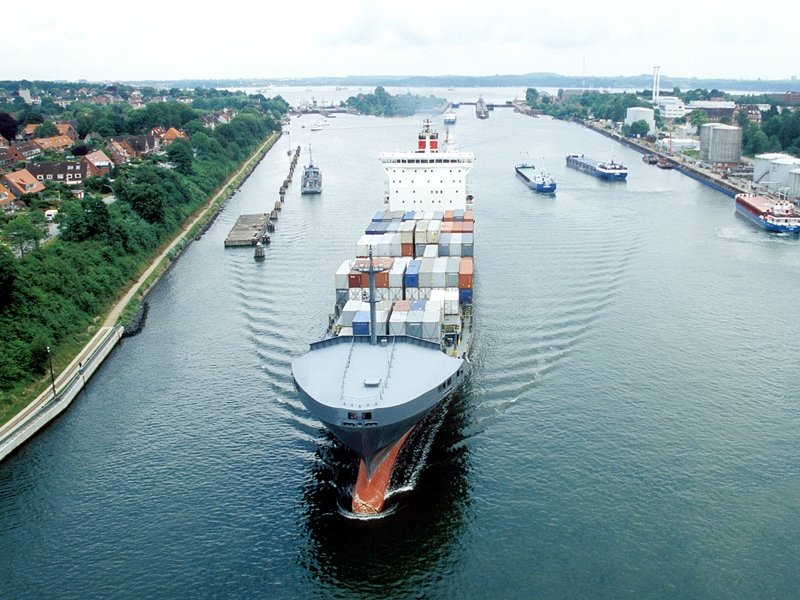
9(b) A vessel of less than 20 metres in length or a sailing vessel shall not impede the passage of a vessel which can safely navigate only within a narrow channel or fairway.
- “A vessel of less than 20 metres in length or a sailing vessel”Any vessel under 20 metres, power or sail, and sailing vessels of any size.
- “shall not impede the passage of a vessel which can safely navigate only within a narrow channel or fairway”Keep out of the path of a vessel that has to stay in the channel, for example because of her draught. Act early, so she doesn’t have to change course or speed for you (Rule 8(f)).
Small craft and sailing vessels must keep out of the way of vessels that can only use the channel, and act early. Rule 18 begins “Except where Rules 9, 10 and 13 otherwise require”, so a sailing vessel can’t rely on the usual order between power and sail here.
9(c) A vessel engaged in fishing shall not impede the passage of any other vessel navigating within a narrow channel or fairway.
- “A vessel engaged in fishing shall not impede the passage of any other vessel navigating within a narrow channel or fairway”A vessel fishing with gear that restricts her manoeuvrability (Rule 3(d)) must not get in the way of any vessel using the channel, not only those that can only navigate within it.
In a channel, fishing must not obstruct the traffic using it. This covers every vessel in the channel, a wider duty than in 9(b).
9(d) A vessel shall not cross a narrow channel or fairway if such crossing impedes the passage of a vessel which can safely navigate only within such channel or fairway. The latter vessel may use the sound signal prescribed in Rule 34(d) if in doubt as to the intention of the crossing vessel.
- “A vessel shall not cross a narrow channel or fairway if such crossing impedes the passage of a vessel which can safely navigate only within such channel or fairway”Before crossing, check the channel. Don’t cross ahead of a vessel that has to stay in the channel if doing so would make her change course or speed.
- “The latter vessel may use the sound signal prescribed in Rule 34(d) if in doubt as to the intention of the crossing vessel”If the vessel in the channel is unsure what the crossing vessel is doing, she may sound at least five short and rapid blasts.
Cross only when it won’t get in the way of a vessel confined to the channel. Five or more short, rapid blasts mean the other vessel is in doubt about your intentions.
9(e) (i) In a narrow channel or fairway when overtaking can take place only if the vessel to be overtaken has to take action to permit safe passing, the vessel intending to overtake shall indicate her intention by sounding the appropriate signal prescribed in Rule 34(c)(i). The vessel to be overtaken shall, if in agreement, sound the appropriate signal prescribed in Rule 34(c)(ii) and take steps to permit safe passing. If in doubt she may sound the signals prescribed in Rule 34(d).
- “when overtaking can take place only if the vessel to be overtaken has to take action to permit safe passing”This procedure is for when there isn’t room to overtake unless the vessel ahead moves over or slows down.
- “the vessel intending to overtake shall indicate her intention by sounding the appropriate signal prescribed in Rule 34(c)(i)”The overtaking vessel signals: two prolonged blasts and one short to pass on the other vessel’s starboard side, or two prolonged blasts and two short to pass on her port side.
- “The vessel to be overtaken shall, if in agreement, sound the appropriate signal prescribed in Rule 34(c)(ii) and take steps to permit safe passing”If she agrees, the vessel ahead sounds one prolonged, one short, one prolonged and one short blast, and makes room.
- “If in doubt she may sound the signals prescribed in Rule 34(d)”If she isn’t sure it is safe, she sounds at least five short and rapid blasts.
In a narrow channel, signal before you overtake and wait for the answer. Agreement is one prolonged, one short, one prolonged, one short; five or more short, rapid blasts mean the vessel ahead is in doubt.


9(e)(ii) This Rule does not relieve the overtaking vessel of her obligation under Rule 13.
- “This Rule does not relieve the overtaking vessel of her obligation under Rule 13”Even after the vessel ahead has agreed, the overtaking vessel must keep out of her way until she is finally past and clear (Rule 13).
Agreement to overtake doesn’t shift responsibility. The overtaking vessel keeps clear throughout.
9(f) A vessel nearing a bend or an area of a narrow channel or fairway where other vessels may be obscured by an intervening obstruction shall navigate with particular alertness and caution and shall sound the appropriate signal prescribed in Rule 34(e).
- “A vessel nearing a bend or an area of a narrow channel or fairway where other vessels may be obscured by an intervening obstruction”Anywhere you can’t see what is coming, such as round a bend or behind a pier or moored vessels.
- “shall navigate with particular alertness and caution”Slow down if needed, keep a sharp look-out and be ready to act.
- “and shall sound the appropriate signal prescribed in Rule 34(e)”Sound one prolonged blast. Any approaching vessel round the bend answers with a prolonged blast.
Approaching a blind bend: one prolonged blast, extra caution, and listen for the reply.

9(g) Any vessel shall, if the circumstances of the case admit, avoid anchoring in a narrow channel.
- “Any vessel shall, if the circumstances of the case admit, avoid anchoring in a narrow channel”Don’t anchor in a narrow channel unless you have to, for example after an engine failure. An anchored vessel narrows the channel for everyone else.
Keep narrow channels clear: anchor outside them unless there is no safe alternative.