Part C · Lights and shapes · Rule 21
Definitions
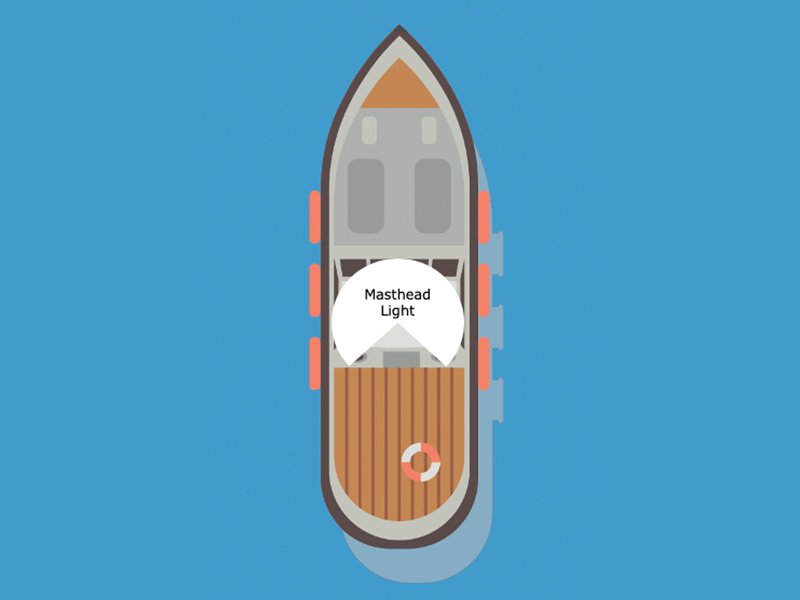
21(a) “Masthead light” means a white light placed over the fore and aft centreline of the vessel showing an unbroken light over an arc of the horizon of 225 degrees and so fixed as to show the light from right ahead to 22.5 degrees abaft the beam on either side of the vessel.
- “‘Masthead light’ means a white light placed over the fore and aft centreline of the vessel”A masthead light is white and sits on the centreline, so it shows equally to both sides. It is the light that marks a power-driven vessel underway (Rule 23(a)).
- “showing an unbroken light over an arc of the horizon of 225 degrees and so fixed as to show the light from right ahead to 22.5 degrees abaft the beam on either side of the vessel”It shows forward over 225°: from right ahead round to 22.5° abaft the beam on each side (112.5° each side). From anywhere more than 22.5° abaft her beam, you can’t see it.
Masthead light: white, on the centreline, shining forward over 225°. If you can see it, you are ahead of her stern sector.

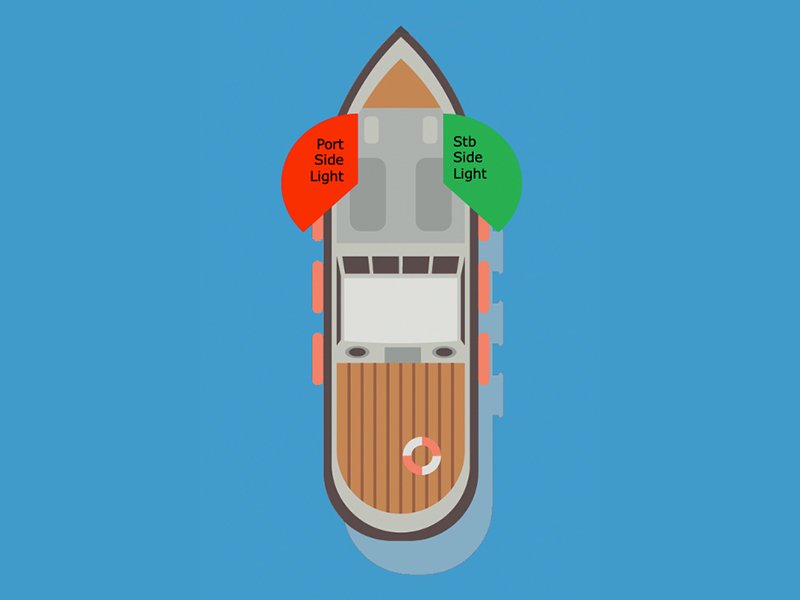
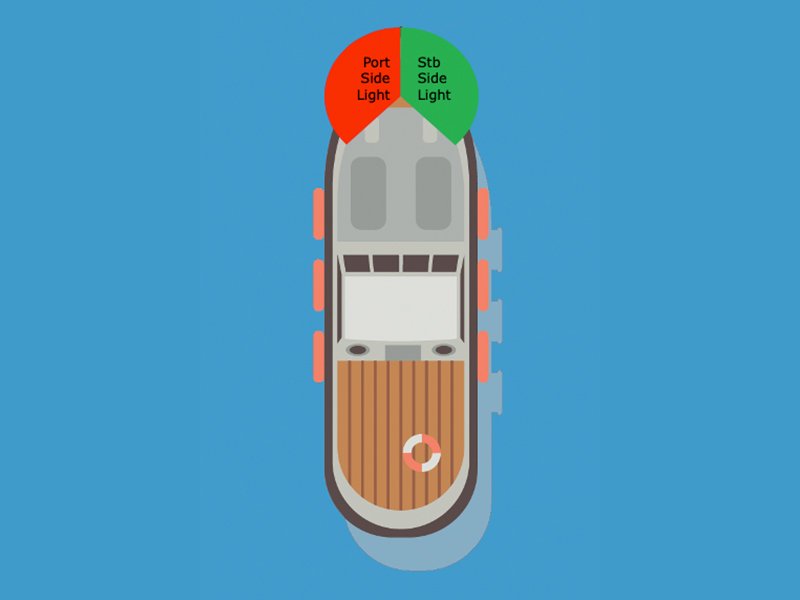
21(b) “Sidelights” means a green light on the starboard side and a red light on the port side each showing an unbroken light over an arc of the horizon of 112.5 degrees and so fixed as to show the light from right ahead to 22.5 degrees abaft the beam on its respective side. In a vessel of less than 20 metres in length the sidelights may be combined in one lantern carried on the fore and aft centreline of the vessel.
- “‘Sidelights’ means a green light on the starboard side and a red light on the port side each showing an unbroken light over an arc of the horizon of 112.5 degrees and so fixed as to show the light from right ahead to 22.5 degrees abaft the beam on its respective side”Green on the starboard side, red on the port side. Each covers 112.5°, from right ahead to 22.5° abaft the beam on its own side, the same forward arc as the masthead light split in two. Seeing red tells you you are looking at her port side; seeing green, her starboard side; both together, that she is heading towards you.
- “In a vessel of less than 20 metres in length the sidelights may be combined in one lantern carried on the fore and aft centreline of the vessel”A vessel under 20 metres may use one combined red/green lantern on the centreline instead of two separate lights.
Green to starboard, red to port, each 112.5° from right ahead. Under 20 metres they may share one lantern.
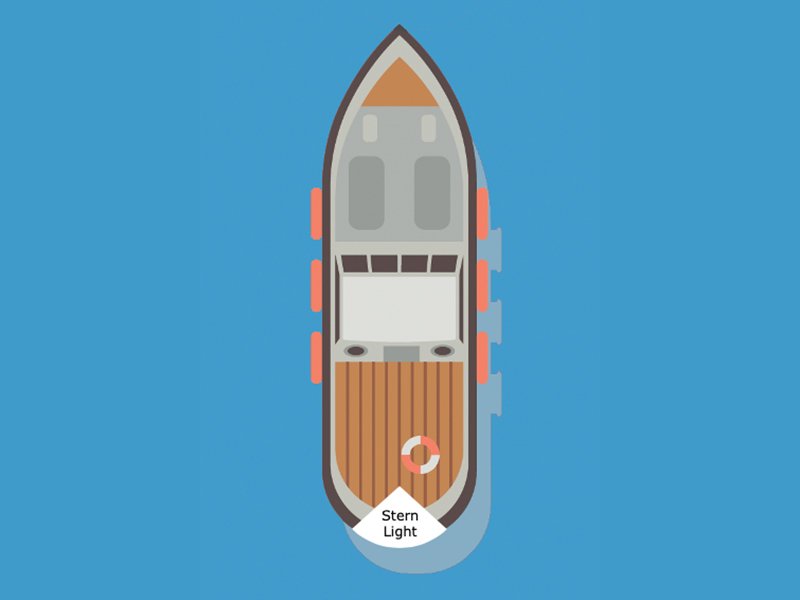
21(c) “Sternlight” means a white light placed as nearly as practicable at the stern showing an unbroken light over an arc of the horizon of 135 degrees and so fixed as to show the light 67.5 degrees from right aft on each side of the vessel.
- “‘Sternlight’ means a white light placed as nearly as practicable at the stern showing an unbroken light over an arc of the horizon of 135 degrees and so fixed as to show the light 67.5 degrees from right aft on each side of the vessel”A white light at the stern covering 135°, 67.5° each side of right aft. Its arc starts exactly where the masthead light and sidelights stop (22.5° abaft the beam), so together they cover the full 360°. Seeing only her sternlight means you are in the overtaking sector (Rule 13(b)).
Sternlight: white, 135° astern. Only the sternlight in view means you are overtaking her.
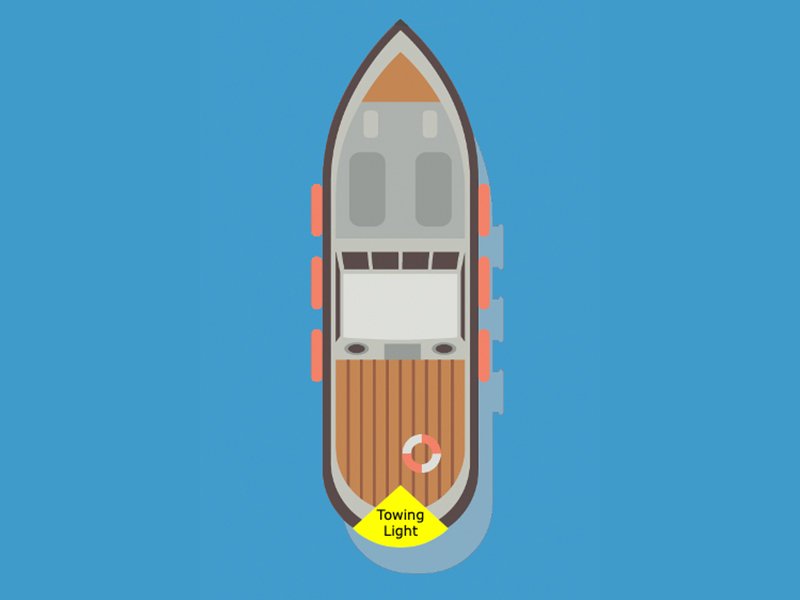
21(d) “Towing light” means a yellow light having the same characteristics as the “sternlight” defined in paragraph (c) of this Rule.
- “‘Towing light’ means a yellow light having the same characteristics as the ‘sternlight’ defined in paragraph (c) of this Rule”A towing light is yellow, but otherwise the same as a sternlight: 135° astern, 67.5° each side of right aft. A towing vessel shows it in a vertical line above her sternlight (Rule 24(a)(iv)).
Yellow over white at the stern means she is towing.
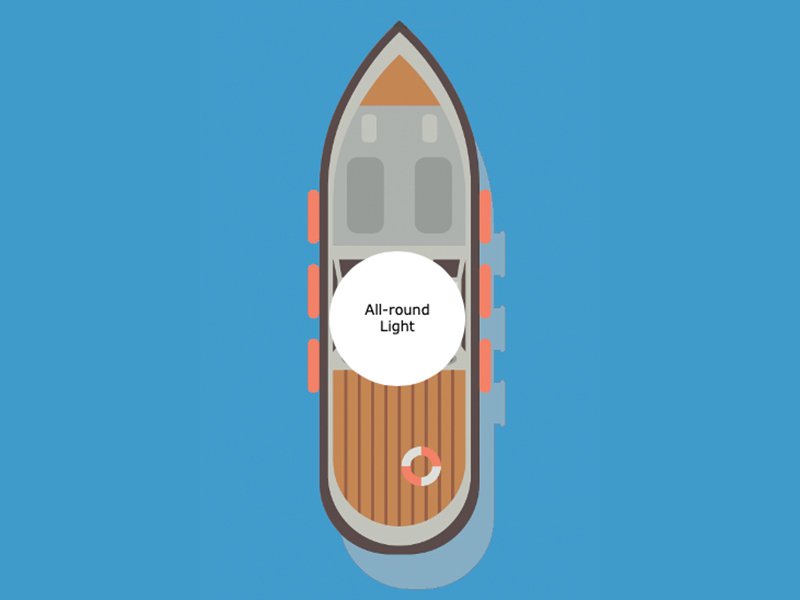
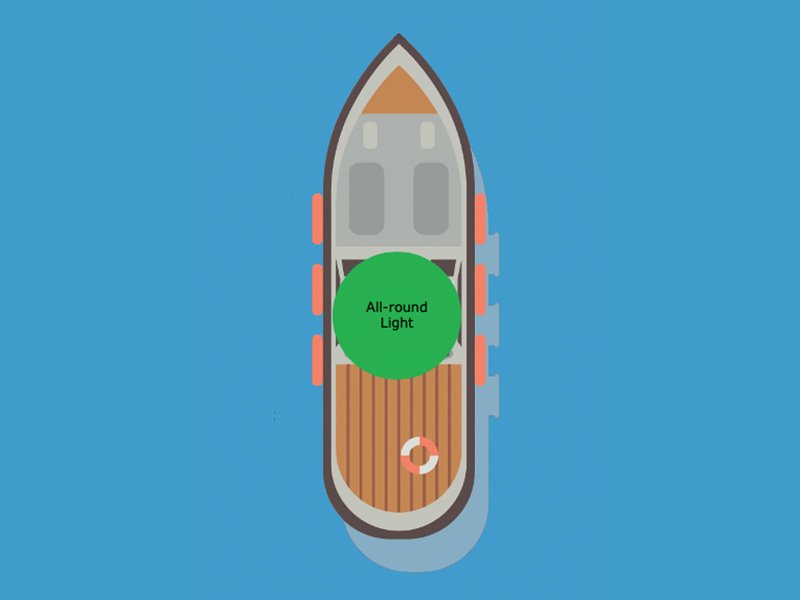
21(e) “All-round light” means a light showing an unbroken light over an arc of the horizon of 360 degrees.
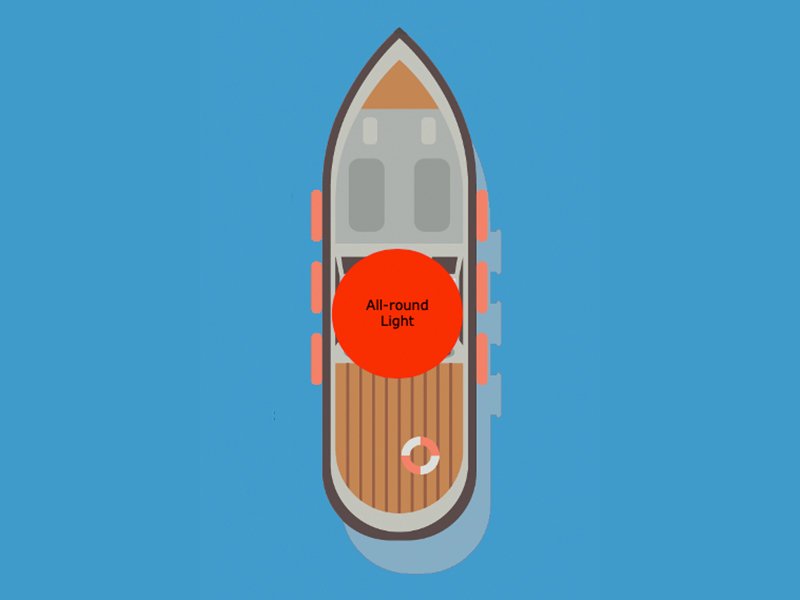
- “‘All-round light’ means a light showing an unbroken light over an arc of the horizon of 360 degrees”An all-round light can be seen from every direction. All-round lights show a vessel’s status rather than her heading, for example an all-round white light for a vessel at anchor (Rule 30(a)(i)), two all-round red lights for a vessel not under command (Rule 27(a)), or green over white for a vessel trawling (Rule 26(b)(i)).
All-round lights (360°) tell you what a vessel is doing, not which way she is heading.
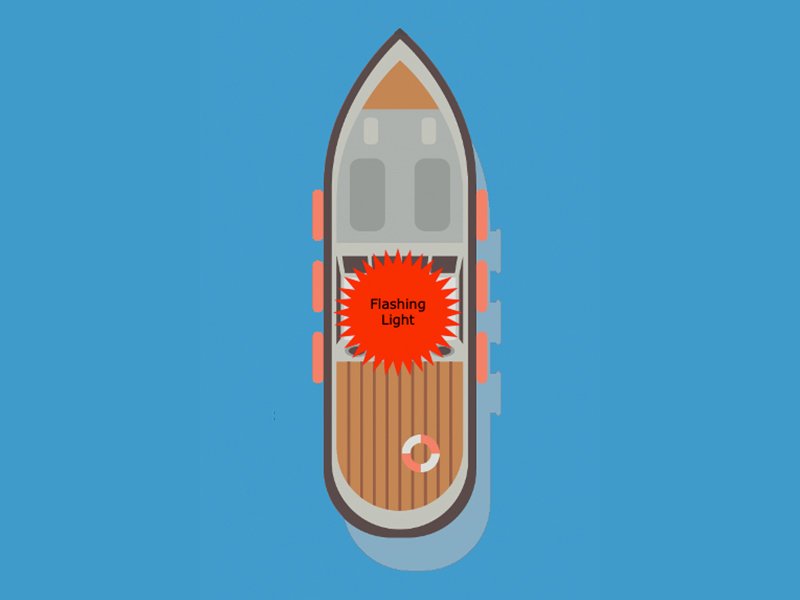
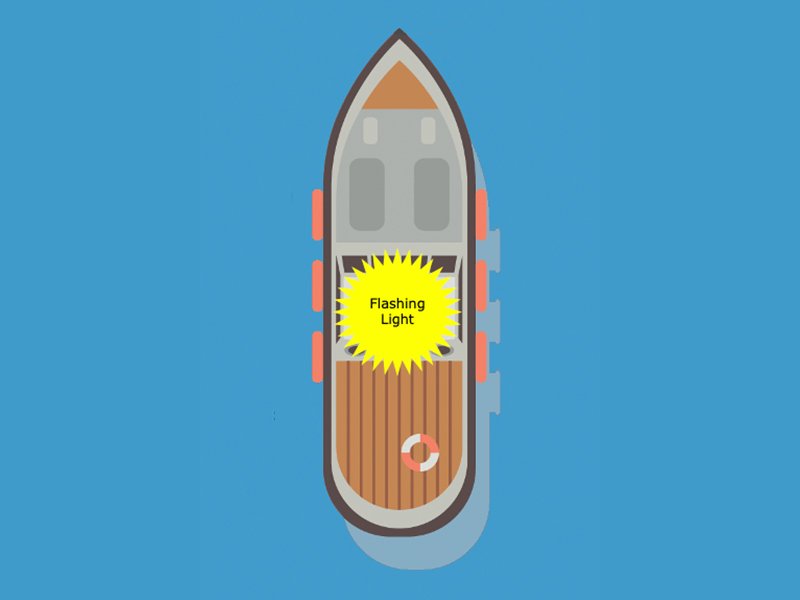
21(f) “Flashing light” means a light flashing at regular intervals at a frequency of 120 flashes or more per minute.
- “‘Flashing light’ means a light flashing at regular intervals at a frequency of 120 flashes or more per minute”At least 120 flashes a minute, evenly spaced: at least two a second. For example, an air-cushion vessel in non-displacement mode shows an all-round flashing yellow light (Rule 23(b)), and a WIG craft taking off, landing or in flight near the surface shows a high-intensity all-round flashing red light (Rule 23(c)).
Flashing means fast: 120 or more flashes a minute.
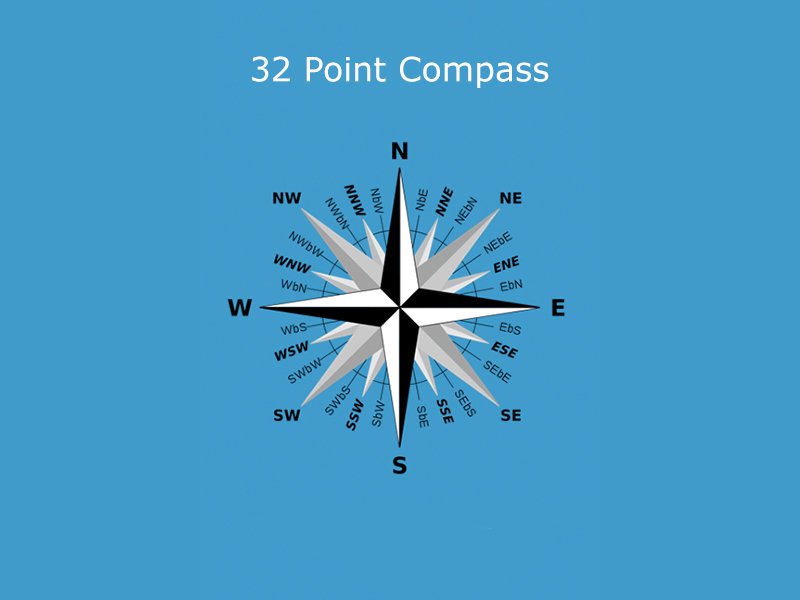
Guide Relative bearings used in the light definitions (course guidance, not rule text)
- Right ahead, the beam and right aftThe light arcs are measured from the vessel’s own heading. Right ahead is along the centreline forward; the beam is at right angles to it on each side; right aft is along the centreline astern. “Abaft the beam” means further aft than the beam.
- 22.5 degrees abaft the beamThe key line in Rule 21: it is where the masthead light and sidelights end and the sternlight begins. It is also the line that decides whether you are overtaking (Rule 13(b)).
Learn the arcs: masthead 225°, each sidelight 112.5°, sternlight 135°. They meet at 22.5° abaft the beam.