
Annexes · Annex I
Positioning and technical details of lights and shapes
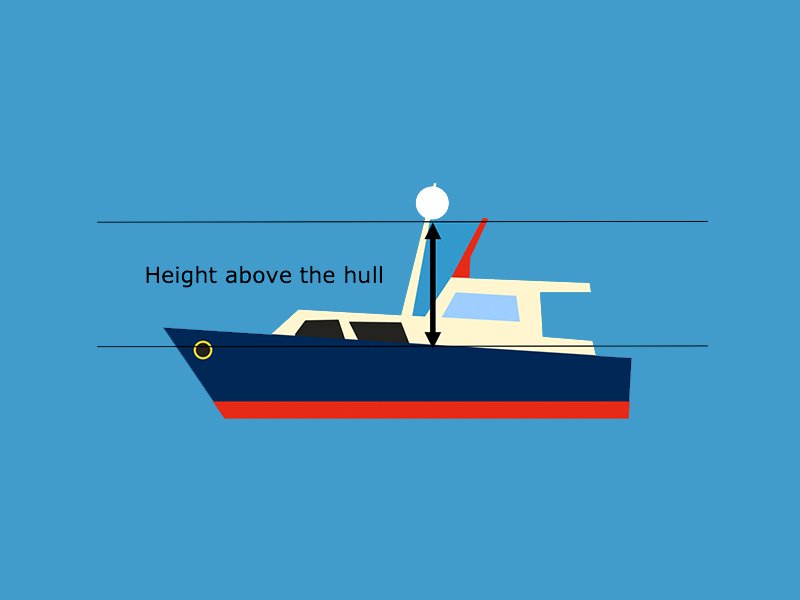
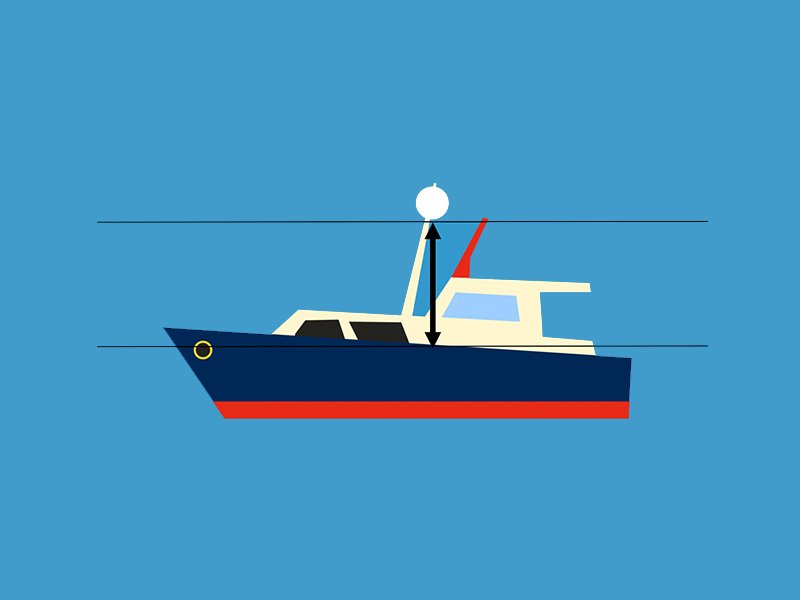
Section 1 Definition. The term “height above the hull” means height above the uppermost continuous deck. This height shall be measured from the position vertically beneath the location of the light.
- “The term “height above the hull” means height above the uppermost continuous deck”Many heights in this Annex are measured “above the hull”. That means above the highest deck that runs the full length of the vessel without a break, not above the waterline or a deckhouse roof.
- “This height shall be measured from the position vertically beneath the location of the light”Measure straight down from the light to that deck.
“Height above the hull” = height above the uppermost continuous deck, measured straight down from the light.
Section 2(a) Vertical positioning and spacing of lights. On a power-driven vessel of 20 metres or more in length the masthead lights shall be placed as follows:
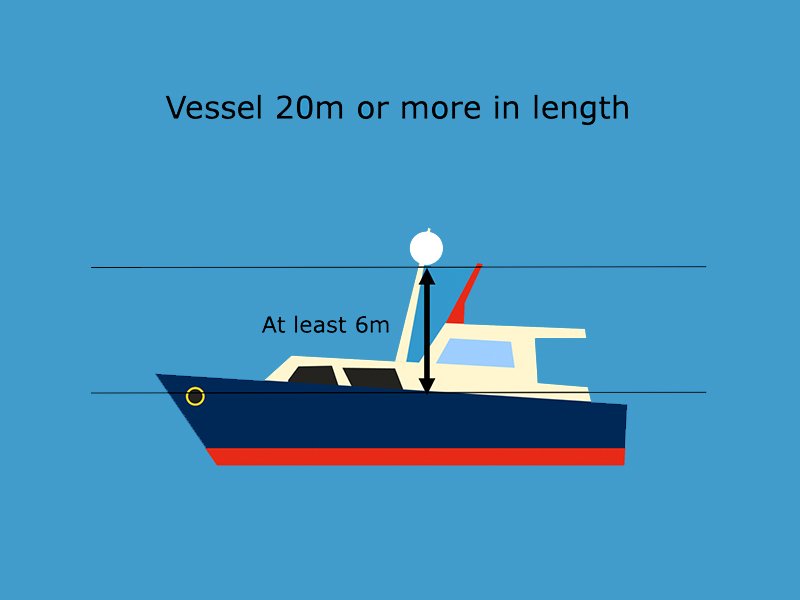
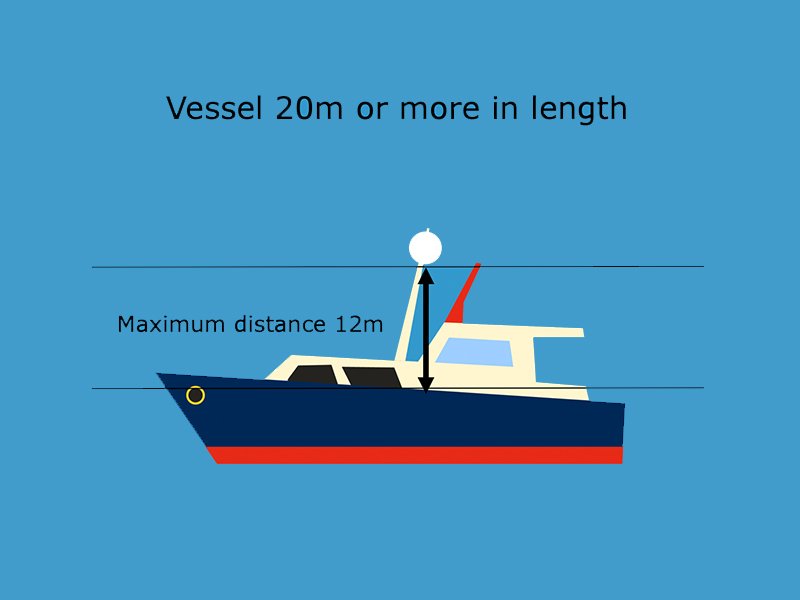
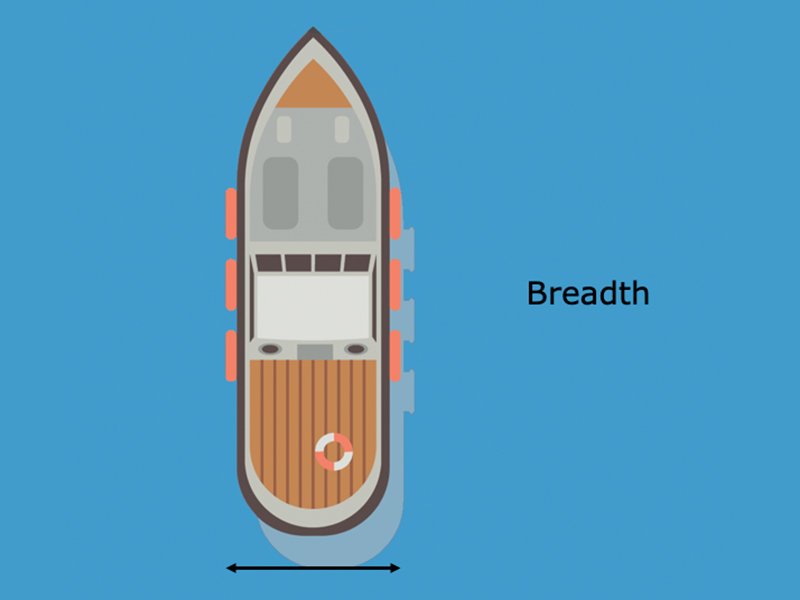
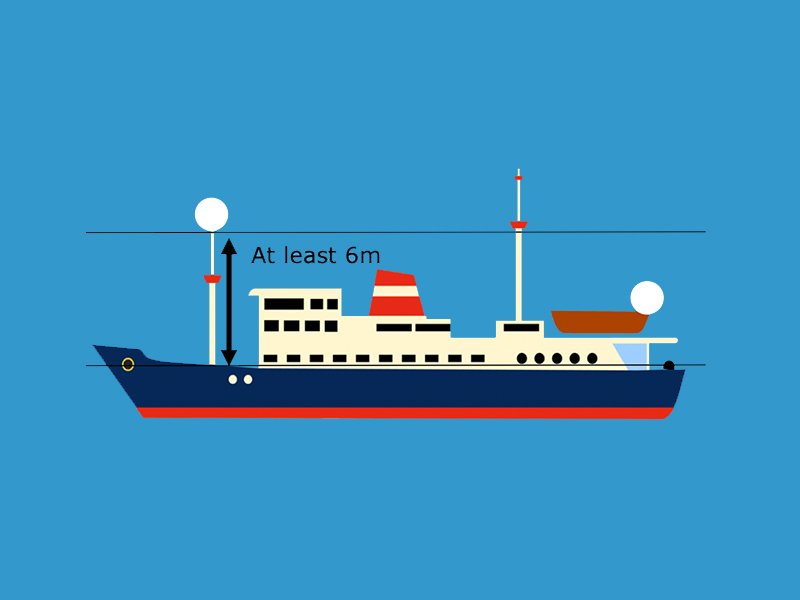
(i) the forward masthead light, or if only one masthead light is carried, then that light, at a height above the hull of not less than 6 metres, and, if the breadth of the vessel exceeds 6 metres, then at a height above the hull not less than such breadth, so however that the light need not be placed at a greater height above the hull than 12 metres;
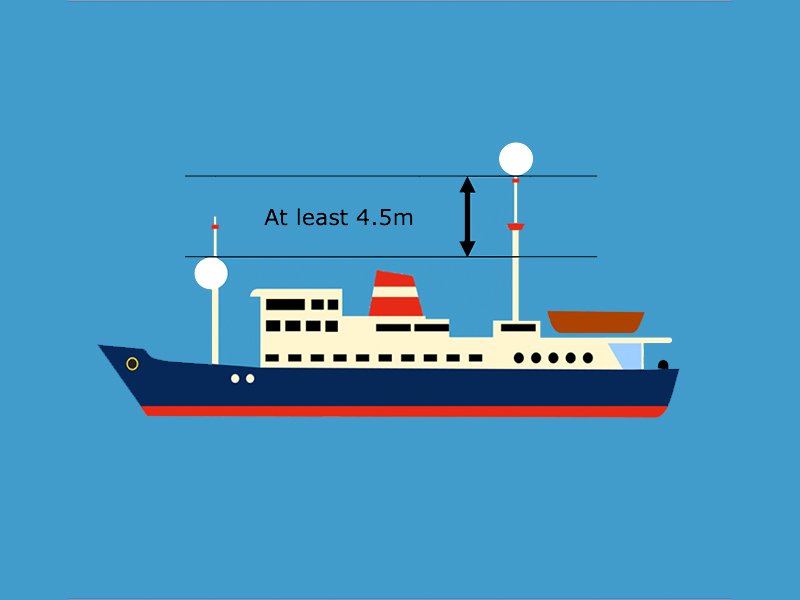
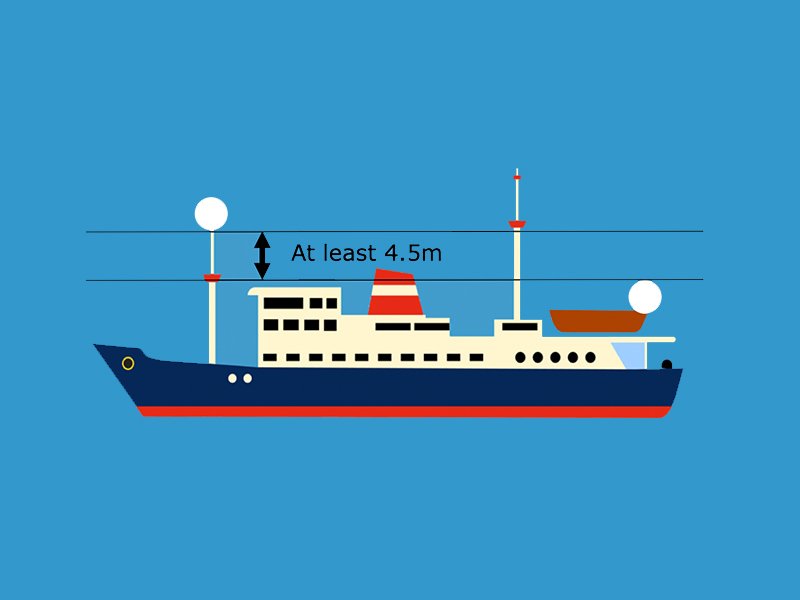
(ii) when two masthead lights are carried the after one shall be at least 4.5 metres vertically higher than the forward one.
- “On a power-driven vessel of 20 metres or more in length the masthead lights shall be placed as follows”This paragraph applies only to power-driven vessels of 20 metres or more. Smaller vessels are covered by 2(c) and 2(d).
- “(i) the forward masthead light, or if only one masthead light is carried, then that light, at a height above the hull of not less than 6 metres”The forward masthead light, or the only one, must be at least 6 metres above the hull.
- “and, if the breadth of the vessel exceeds 6 metres, then at a height above the hull not less than such breadth, so however that the light need not be placed at a greater height above the hull than 12 metres”If she is more than 6 metres wide, the light must be at least as high as she is wide, for example 8 metres on a vessel 8 metres wide. But it never has to be more than 12 metres high. That is not a maximum height: it may be higher.
- “(ii) when two masthead lights are carried the after one shall be at least 4.5 metres vertically higher than the forward one”With two masthead lights, the after one is at least 4.5 metres higher, so the pair shows which way she is heading (Rule 23(a)).
- If the breadth of the boat exceeds 6 metres, then the height of the masthead light shall not be lower than this measurement. So for example if the breadth of the vessel is 8m the height above the hull shall be no lower than 8m in height.
- The aft light shall be placed at least 4.5m higher than the forward light.
20 m or more: forward masthead light at least 6 m above the hull (or her breadth, if greater, up to 12 m); after light at least 4.5 m higher.
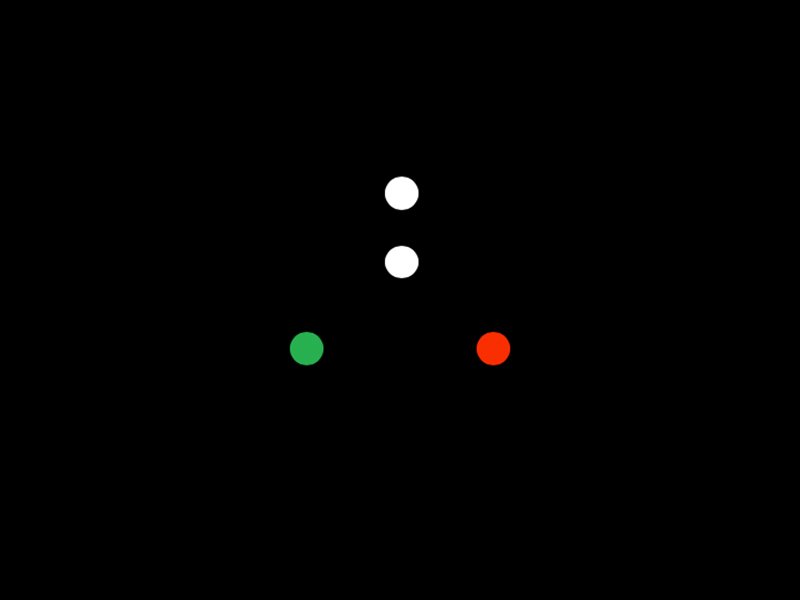
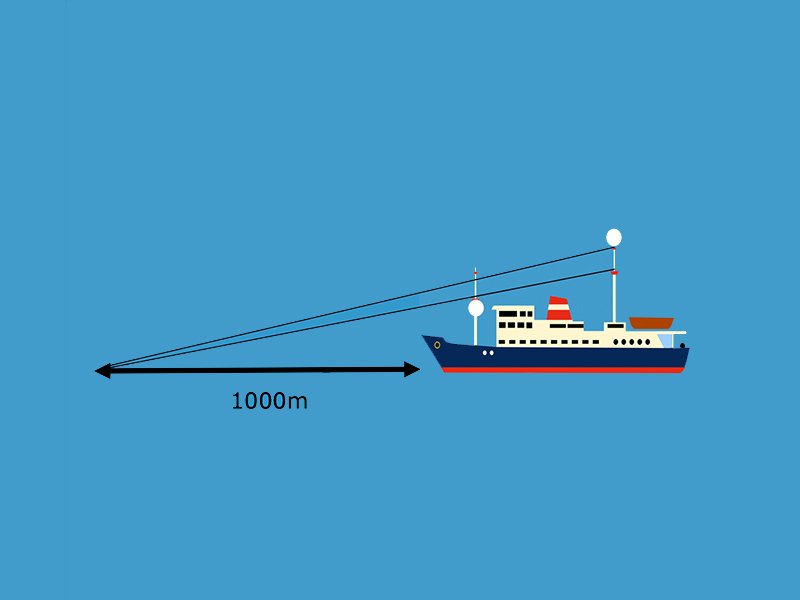
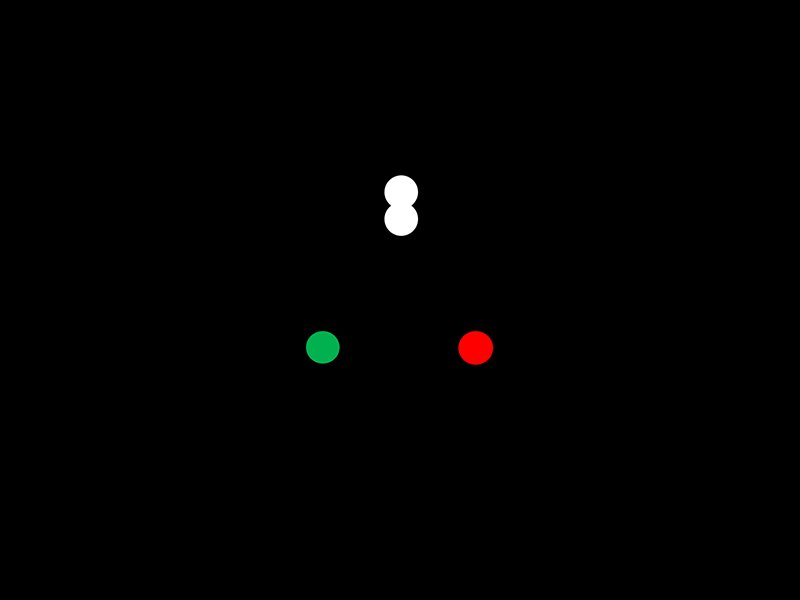
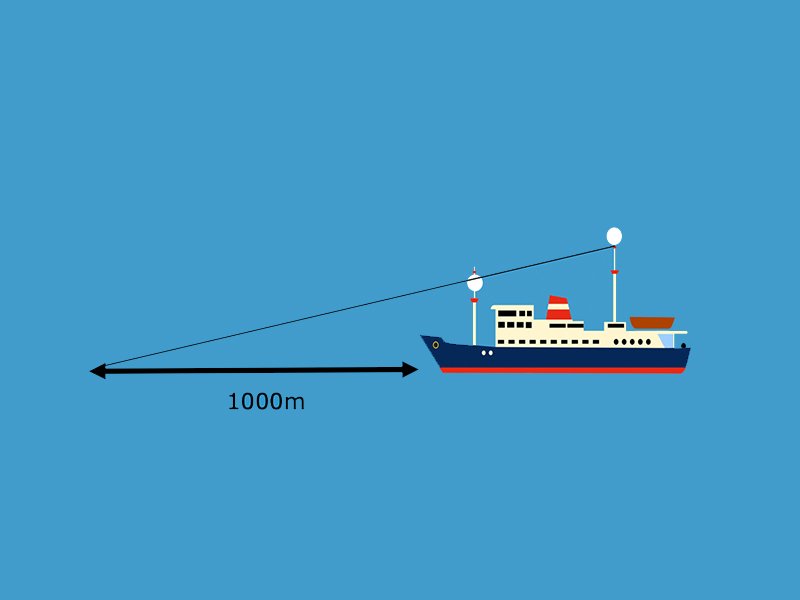
Section 2(b) The vertical separation of masthead lights of power-driven vessels shall be such that in all normal conditions of trim the after light will be seen over and separate from the forward light at a distance of 1,000 metres from the stem when viewed from sea-level.
- “The vertical separation of masthead lights of power-driven vessels shall be such that in all normal conditions of trim the after light will be seen over and separate from the forward light”The two masthead lights must be far enough apart vertically that the after light is always seen above the forward one, as two separate lights, whatever her normal trim.
- “at a distance of 1,000 metres from the stem when viewed from sea-level”The test is from 1,000 metres ahead of her stem (the foremost part of the bow), at sea level. If they merge into one at that distance, they are too close together.
From 1,000 m ahead, the two masthead lights must still show as two lights, one above the other.


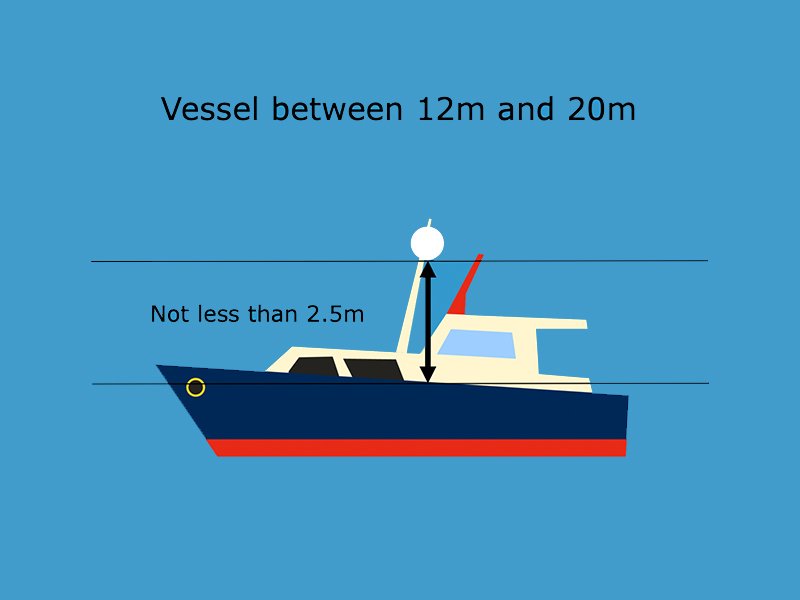
Section 2(c) The masthead light of a power-driven vessel of 12 metres but less than 20 metres in length shall be placed at a height above the gunwale of not less than 2.5 metres.
- “The masthead light of a power-driven vessel of 12 metres but less than 20 metres in length shall be placed at a height above the gunwale of not less than 2.5 metres”From 12 metres up to 20 metres: the masthead light at least 2.5 metres above the gunwale (the top edge of the hull).
12 m to under 20 m: masthead light at least 2.5 m above the gunwale.
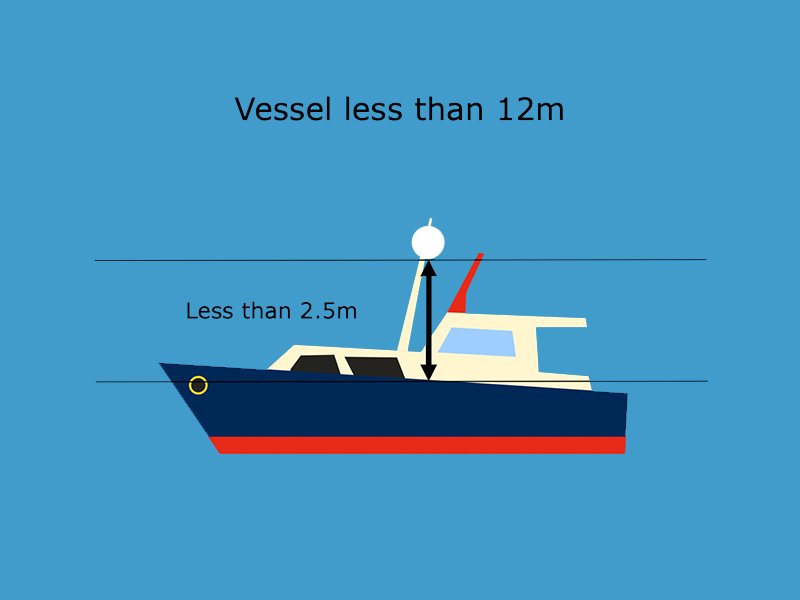
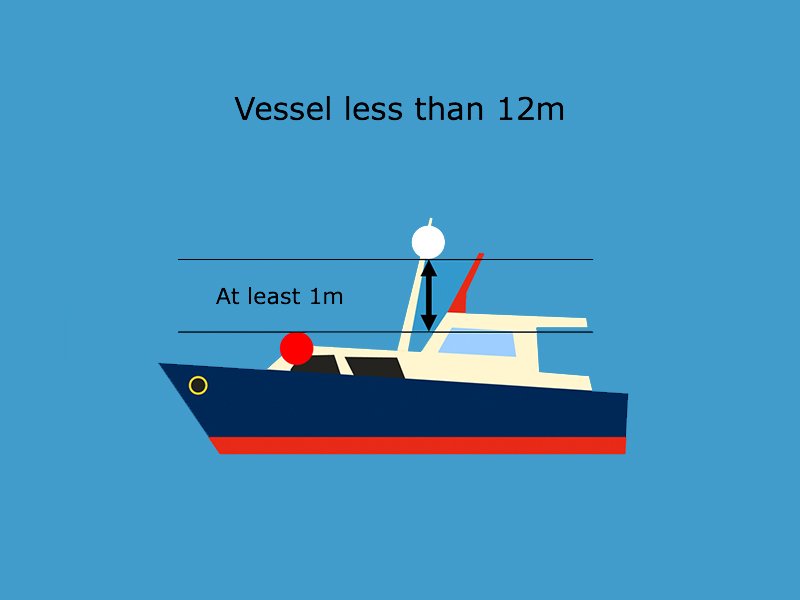
Section 2(d) A power-driven vessel of less than 12 metres in length may carry the uppermost light at a height of less than 2.5 metres above the gunwale. When however a masthead light is carried in addition to sidelights and a sternlight or the all-round light prescribed in Rule 23(c)(i) is carried in addition to sidelights, then such masthead light or all-round light shall be carried at least 1 metre higher than the sidelights.
- “A power-driven vessel of less than 12 metres in length may carry the uppermost light at a height of less than 2.5 metres above the gunwale”Under 12 metres, the highest light may be less than 2.5 metres above the gunwale.
- “When however a masthead light is carried in addition to sidelights and a sternlight or the all-round light prescribed in Rule 23(c)(i) is carried in addition to sidelights, then such masthead light or all-round light shall be carried at least 1 metre higher than the sidelights”Whether she shows a masthead light or an all-round white light, it must be at least 1 metre above the sidelights. MSN 1781 refers to Rule 23(c)(i) here; the all-round white light for a power-driven vessel under 12 metres is now in Rule 23(d)(i).
Under 12 m: the white light may be lower than 2.5 m, but at least 1 m above the sidelights.
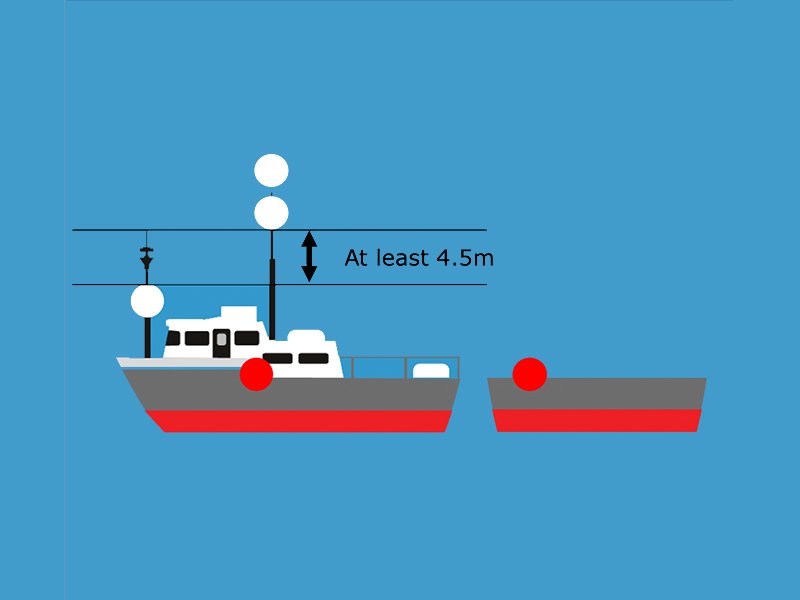
Section 2(e) One of the two or three masthead lights prescribed for a power-driven vessel when engaged in towing or pushing another vessel shall be placed in the same position as either the forward masthead light or the after masthead light; provided that, if carried on the aftermast, the lowest after masthead light shall be at least 4.5 metres vertically higher than the forward masthead light.
- “One of the two or three masthead lights prescribed for a power-driven vessel when engaged in towing or pushing another vessel shall be placed in the same position as either the forward masthead light or the after masthead light”A towing or pushing vessel shows two or three masthead lights in a vertical line (Rule 24). One of them goes where her normal forward or after masthead light would be.
- “provided that, if carried on the aftermast, the lowest after masthead light shall be at least 4.5 metres vertically higher than the forward masthead light”If the vertical line of towing lights is on the aftermast, its lowest light must be at least 4.5 metres above the forward masthead light, as in 2(a)(ii).
Towing masthead lights replace the forward or after masthead light; if aft, the lowest is at least 4.5 m above the forward one.
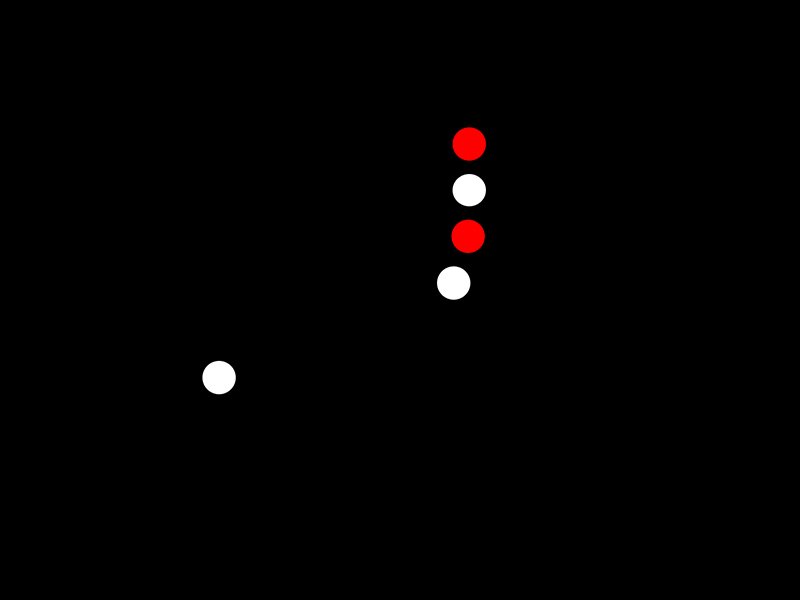
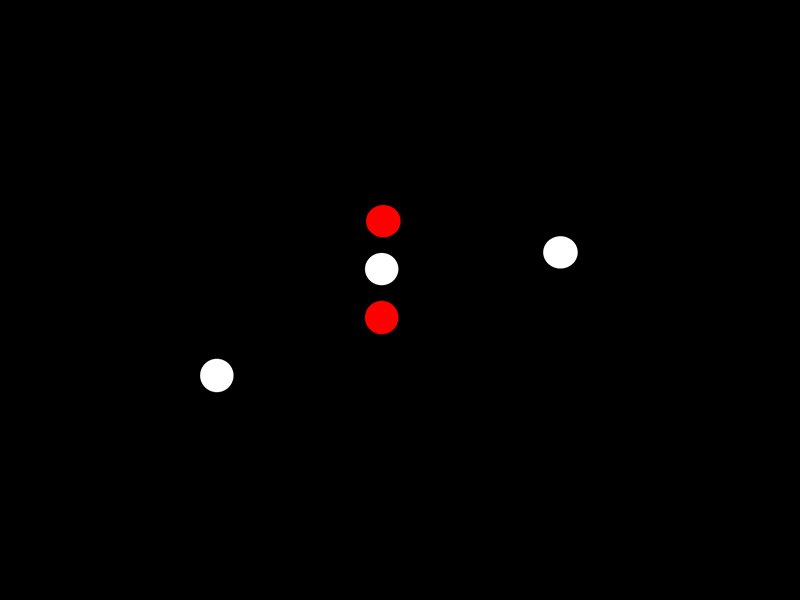
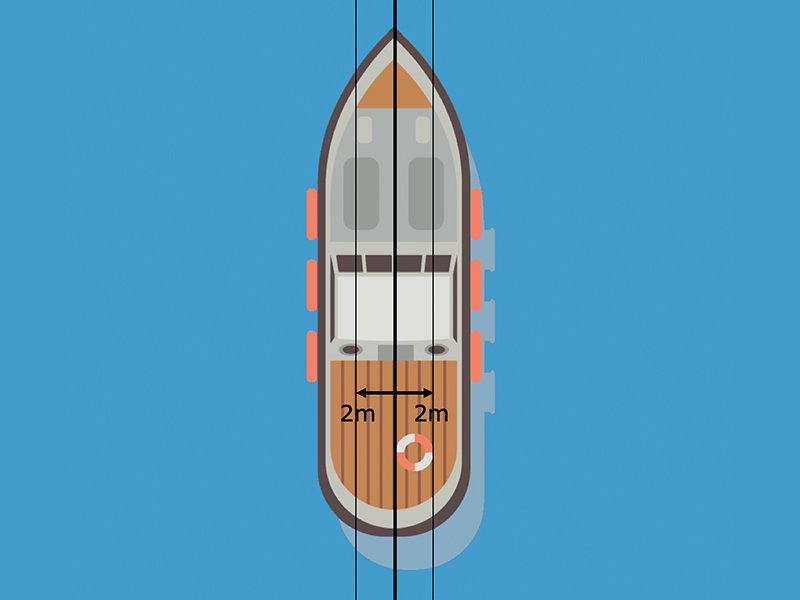
Section 2(f) (i) The masthead light or lights prescribed in Rule 23(a) shall be so placed as to be above and clear of all other lights and obstructions except as described in sub-paragraph (ii).
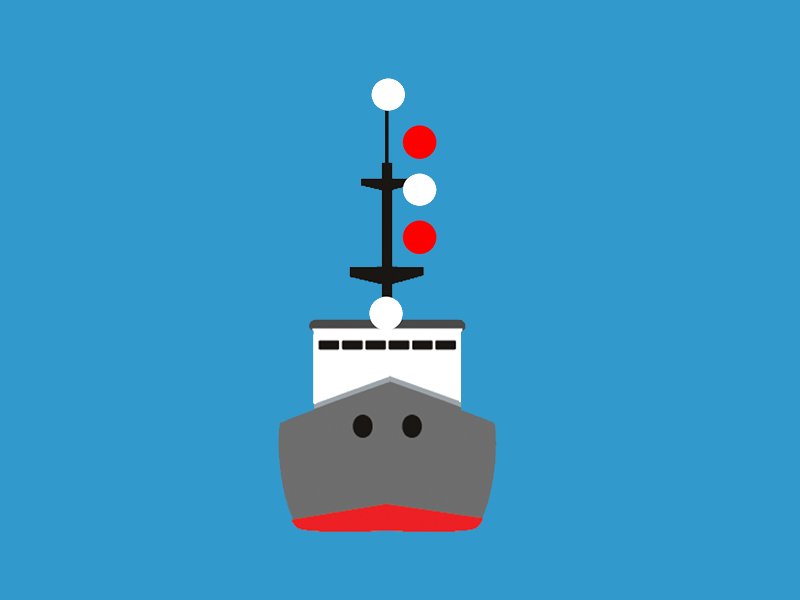
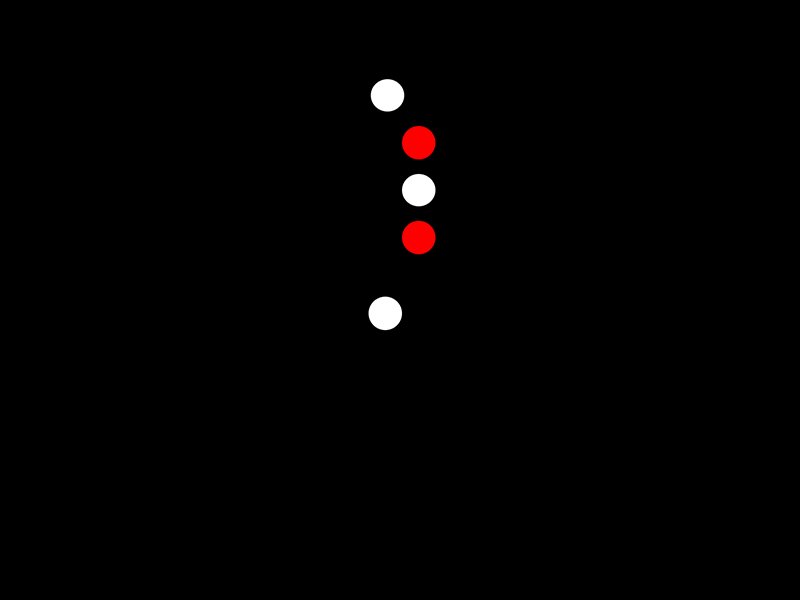
(ii) When it is impracticable to carry the all-round lights prescribed by Rule 27(b)(i) or Rule 28 below the masthead lights, they may be carried above the after masthead light(s) or vertically in between the forward masthead light(s) and the after masthead light(s) provided that in the latter case the requirement of Section 3(c) of this Annex shall be complied with.
- “(i) The masthead light or lights prescribed in Rule 23(a) shall be so placed as to be above and clear of all other lights and obstructions except as described in sub-paragraph (ii)”Masthead lights go above all other lights and clear of anything that could hide them, such as radar scanners or other masts.
- “(ii) When it is impracticable to carry the all-round lights prescribed by Rule 27(b)(i) or Rule 28 below the masthead lights, they may be carried above the after masthead light(s) or vertically in between the forward masthead light(s) and the after masthead light(s)”The exception: the red-white-red lights of a vessel restricted in her ability to manoeuvre (Rule 27(b)(i)) and the three red lights of a vessel constrained by her draught (Rule 28). If they can’t go below the masthead lights, they may go above the after masthead light, or between the forward and after masthead lights.
- “provided that in the latter case the requirement of Section 3(c) of this Annex shall be complied with”If they go between the masthead lights, they must be at least 2 metres to one side of the centreline (Section 3(c)).
- When placed vertically in between then the lights can be offset off the centre line of the vessel of a distance of no more than 2m. This is just for lights for rule 27 & 28.
Masthead lights are highest. Only the Rule 27(b)(i) and Rule 28 all-round lights may go above or between them.
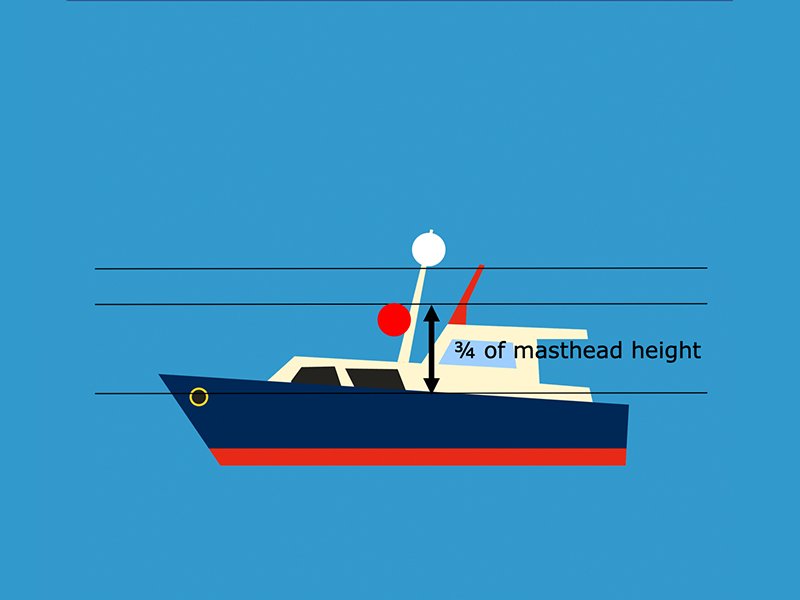
Section 2(g) The sidelights of a power-driven vessel shall be placed at a height above the hull not greater than three-quarters of that of the forward masthead light. They shall not be so low as to be interfered with by deck lights.
- “The sidelights of a power-driven vessel shall be placed at a height above the hull not greater than three-quarters of that of the forward masthead light”Sidelights no higher than three-quarters of the forward masthead light’s height above the hull. For example, with the forward masthead light 8 metres above the hull, the sidelights are no more than 6 metres above it.
- “They shall not be so low as to be interfered with by deck lights”But not so low that deck lighting drowns them out.
Sidelights: no higher than ¾ of the forward masthead light height, and clear of deck lights.
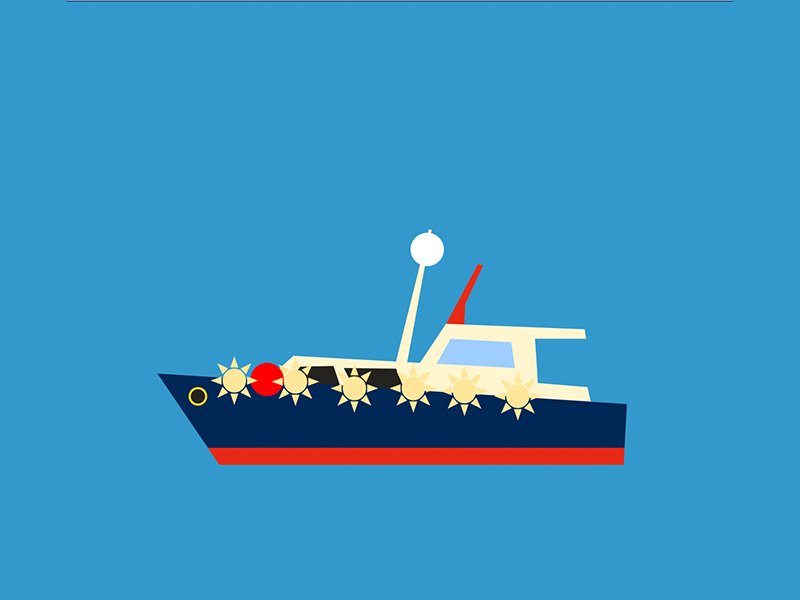
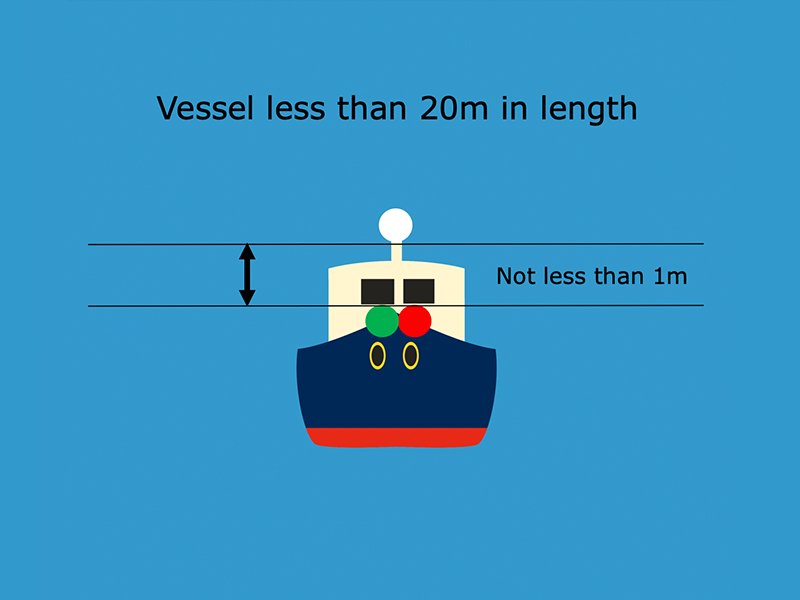
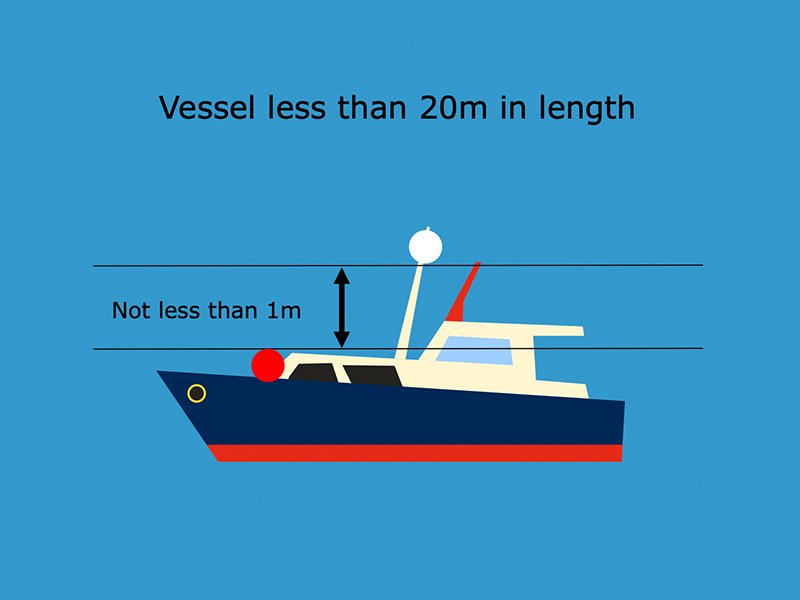
Section 2(h) The sidelights, if in a combined lantern and carried on a power-driven vessel of less than 20 metres in length, shall be placed not less than 1 metre below the masthead light.
- “The sidelights, if in a combined lantern and carried on a power-driven vessel of less than 20 metres in length, shall be placed not less than 1 metre below the masthead light”Under 20 metres, a combined red and green lantern must be at least 1 metre below the masthead light.
Under 20 m: combined sidelight lantern at least 1 m below the masthead light.
Section 2(i) When the Rules prescribe two or three lights to be carried in a vertical line, they shall be spaced as follows:
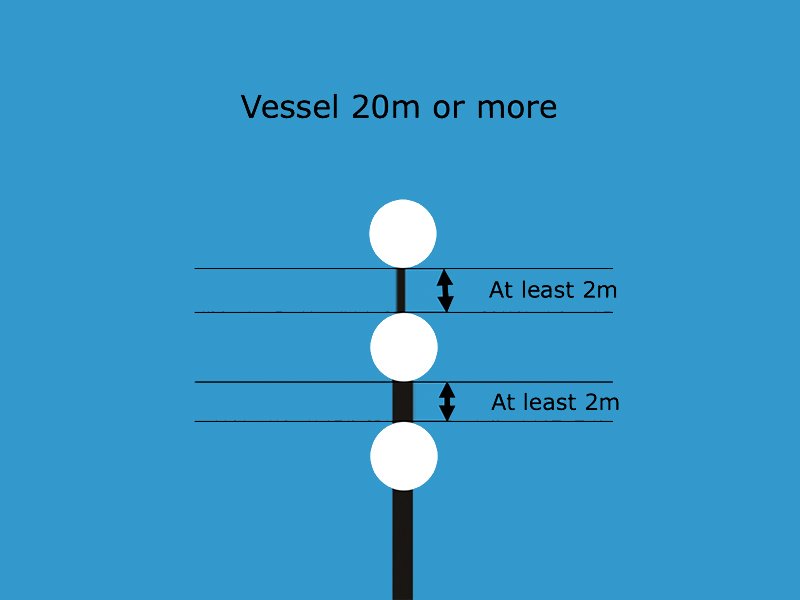
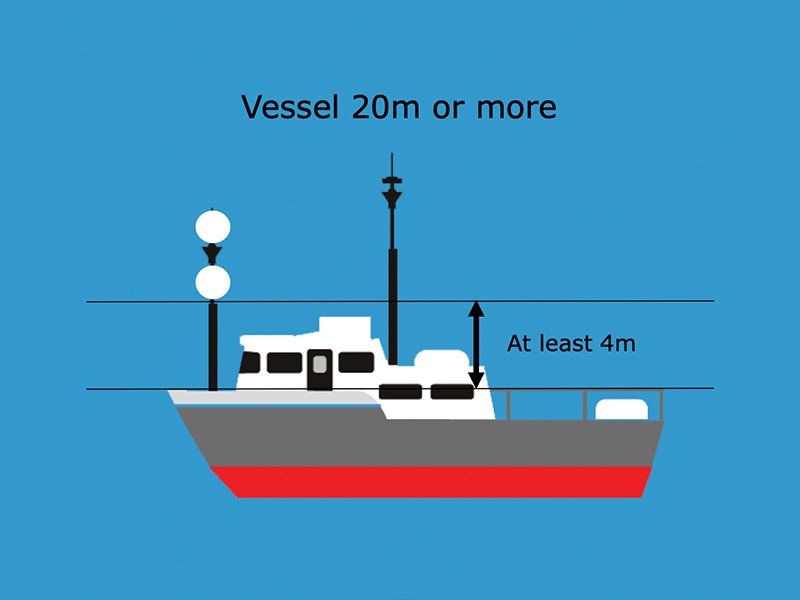
(i) on a vessel of 20 metres in length or more such lights shall be spaced not less than 2 metres apart, and the lowest of these lights shall, except where a towing light is required, be placed at a height of not less than 4 metres above the hull;
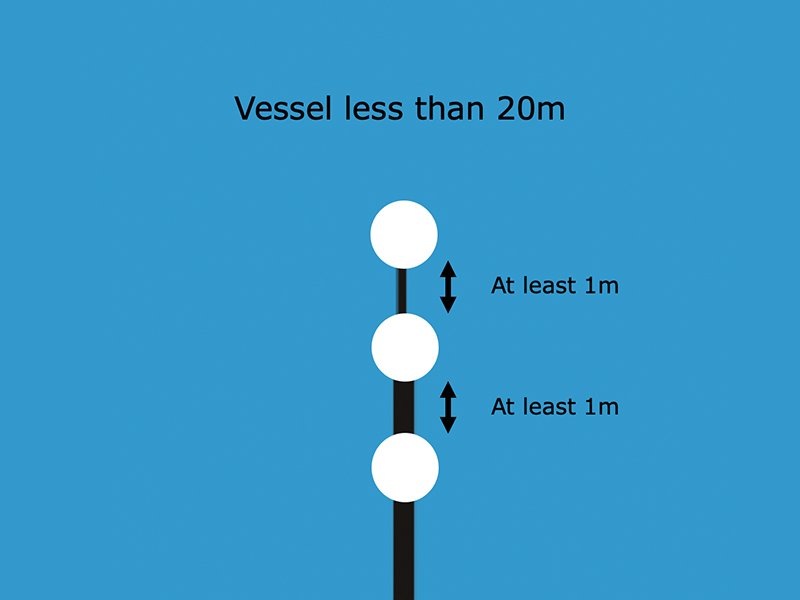
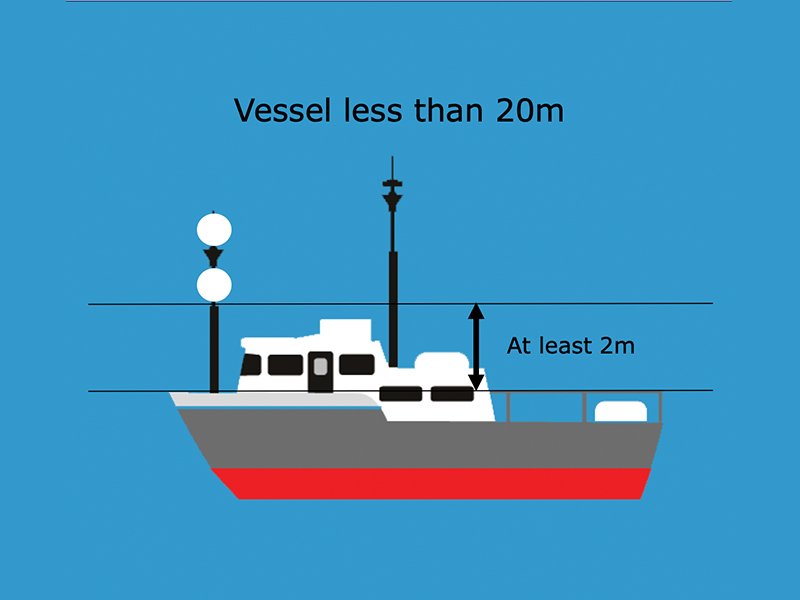
(ii) on a vessel of less than 20 metres in length such lights shall be spaced not less than 1 metre apart and the lowest of these lights shall, except where a towing light is required, be placed at a height of not less than 2 metres above the gunwale;
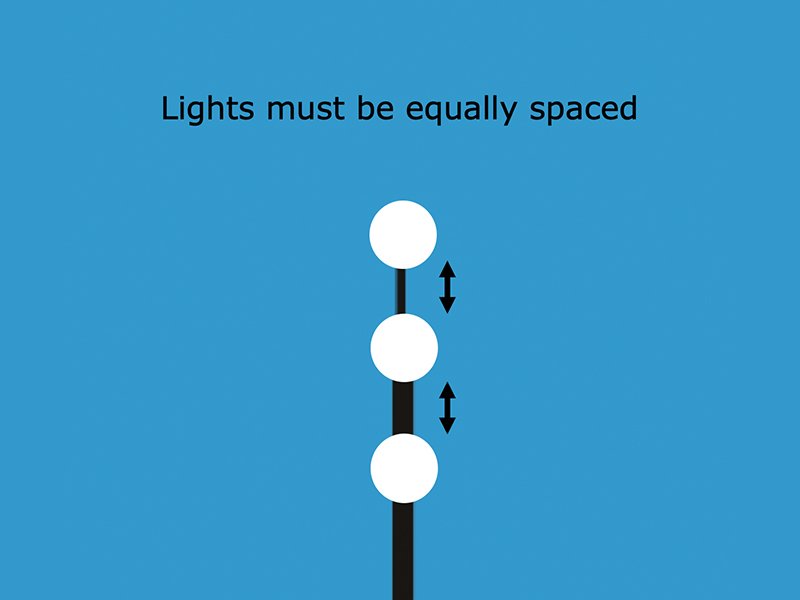
(iii) when three lights are carried they shall be equally spaced.
- “When the Rules prescribe two or three lights to be carried in a vertical line, they shall be spaced as follows”This covers every vertical line of two or three lights: for example not under command, towing masthead lights, fishing, or constrained by her draught.
- “(i) on a vessel of 20 metres in length or more such lights shall be spaced not less than 2 metres apart, and the lowest of these lights shall, except where a towing light is required, be placed at a height of not less than 4 metres above the hull”20 metres or more: at least 2 metres between the lights, and the lowest at least 4 metres above the hull (unless a towing light is required).
- “(ii) on a vessel of less than 20 metres in length such lights shall be spaced not less than 1 metre apart and the lowest of these lights shall, except where a towing light is required, be placed at a height of not less than 2 metres above the gunwale”Under 20 metres: at least 1 metre between the lights, and the lowest at least 2 metres above the gunwale (unless a towing light is required).
- “(iii) when three lights are carried they shall be equally spaced”Three lights in a line must be evenly spaced.
- Lights carried in a vertical line on a vessel less than 20m in length, shall be placed not less than 1 metre apart, these lights shall be equally spaced. The lowest of these lights shall not be less than 2 metres above the gunwale, unless a towing light is required then this is not required.
- You can not have an unequal spacing between lights in a vertical line.
Vertical lines of lights: 2 m apart (1 m under 20 m); lowest at least 4 m above the hull (2 m above the gunwale under 20 m); three lights equally spaced.
Section 2(j) The lower of the two all-round lights prescribed for a vessel when engaged in fishing shall be at a height above the sidelights not less than twice the distance between the two vertical lights.
- “The lower of the two all-round lights prescribed for a vessel when engaged in fishing shall be at a height above the sidelights not less than twice the distance between the two vertical lights”For a fishing vessel’s two all-round lights (green over white or red over white, Rule 26): the gap from the sidelights up to the lower all-round light must be at least twice the gap between the two all-round lights. For example, with the all-round lights 1 metre apart, the lower one is at least 2 metres above the sidelights.
Fishing lights: the lower all-round light is at least twice the lights’ spacing above the sidelights.
Section 2(k) The forward anchor light prescribed in Rule 30(a)(i), when two are carried, shall not be less than 4.5 metres above the after one. On a vessel of 50 metres or more in length this forward anchor light shall be placed at a height of not less than 6 metres above the hull.
- “The forward anchor light prescribed in Rule 30(a)(i), when two are carried, shall not be less than 4.5 metres above the after one”With two anchor lights, the forward one is at least 4.5 metres higher than the after one. The higher light shows which end is the bow.
- “On a vessel of 50 metres or more in length this forward anchor light shall be placed at a height of not less than 6 metres above the hull”At 50 metres or more, the forward anchor light is at least 6 metres above the hull.
Two anchor lights: forward one at least 4.5 m higher than the after one; at least 6 m above the hull at 50 m or more.
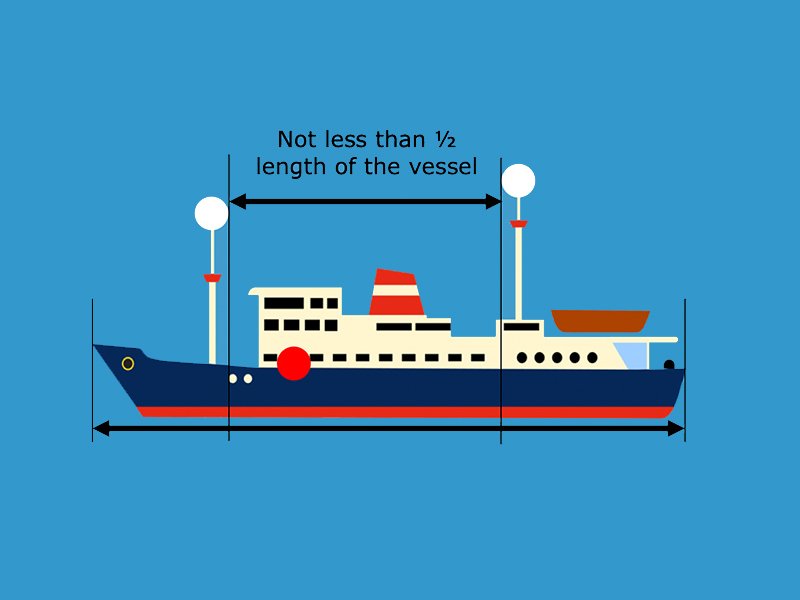
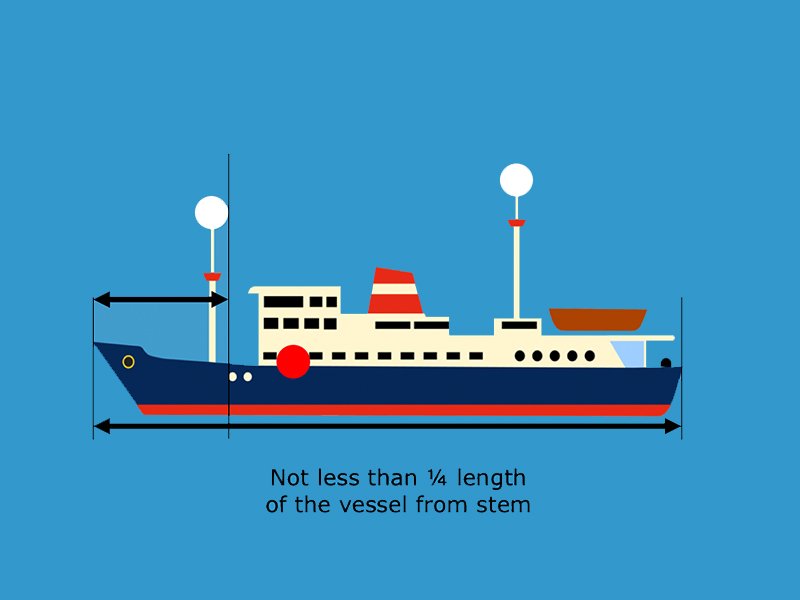
Section 3(a) Horizontal positioning and spacing of lights. When two masthead lights are prescribed for a power-driven vessel, the horizontal distance between them shall not be less than one-half of the length of the vessel but need not be more than 100 metres. The forward light shall be placed not more than one-quarter of the length of the vessel from the stem.
- “When two masthead lights are prescribed for a power-driven vessel, the horizontal distance between them shall not be less than one-half of the length of the vessel but need not be more than 100 metres”Fore and aft, the two masthead lights are at least half her length apart, for example at least 40 metres apart on an 80-metre vessel. They never need to be more than 100 metres apart.
- “The forward light shall be placed not more than one-quarter of the length of the vessel from the stem”The forward masthead light is in the forward quarter of the vessel, so it marks the bow end.
Masthead lights at least half her length apart (100 m is always enough); forward light in the forward quarter.
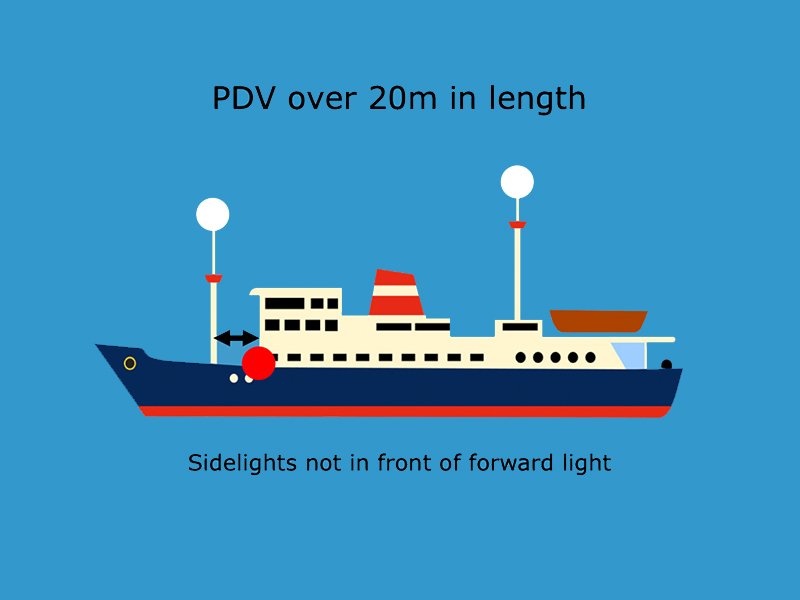
Section 3(b) On a power-driven vessel of 20 metres or more in length the sidelights shall not be placed in front of the forward masthead lights. They shall be placed at or near the side of the vessel.
- “On a power-driven vessel of 20 metres or more in length the sidelights shall not be placed in front of the forward masthead lights”20 metres or more: the sidelights are not forward of the forward masthead light.
- “They shall be placed at or near the side of the vessel”They are at or near her sides, not on the centreline.
20 m or more: sidelights at the sides, and not forward of the forward masthead light.

Section 3(c) When the lights prescribed in Rule 27(b)(i) or Rule 28 are placed vertically between the forward masthead light(s) and the after masthead light(s) these all-round lights shall be placed at a horizontal distance of not less than 2 metres from the fore and aft centreline of the vessels in the athwartship direction.
- “When the lights prescribed in Rule 27(b)(i) or Rule 28 are placed vertically between the forward masthead light(s) and the after masthead light(s)”This applies when the red-white-red (Rule 27(b)(i)) or three red (Rule 28) all-round lights are placed between the masthead lights, as 2(f)(ii) allows.
- “these all-round lights shall be placed at a horizontal distance of not less than 2 metres from the fore and aft centreline of the vessels in the athwartship direction”They must then be at least 2 metres out to one side of the centreline, so they don’t sit in line with the masthead lights. At least 2 metres, not within 2 metres.
All-round lights between the masthead lights: at least 2 m to the side of the centreline.
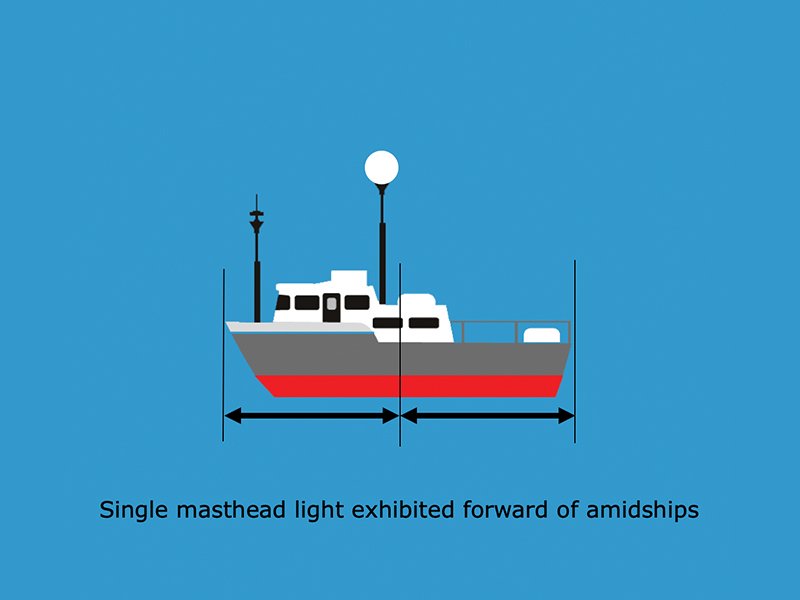
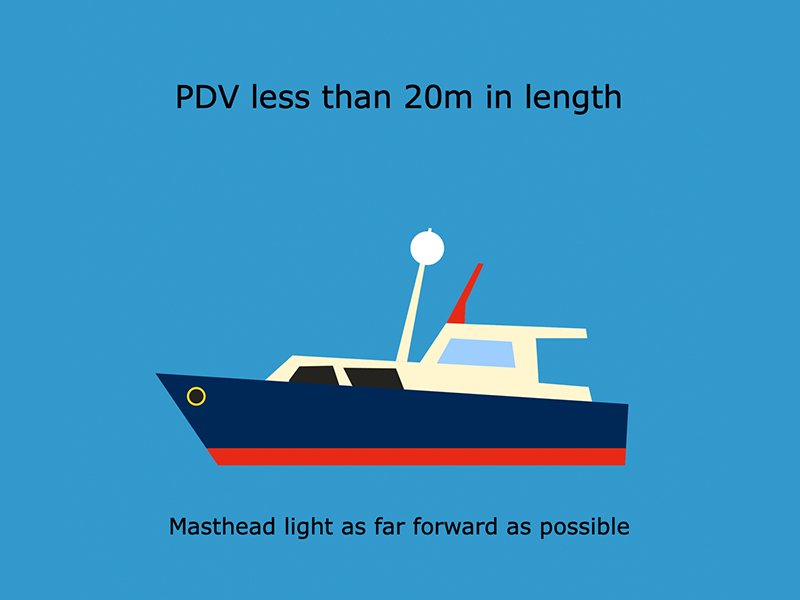
Section 3(d) When only one masthead light is prescribed for a power-driven vessel, this light shall be exhibited forward of amidships; except that a vessel of less than 20 metres in length need not exhibit this light forward of amidships but shall exhibit it as far forward as is practicable.
- “When only one masthead light is prescribed for a power-driven vessel, this light shall be exhibited forward of amidships”A single masthead light goes forward of amidships.
- “except that a vessel of less than 20 metres in length need not exhibit this light forward of amidships but shall exhibit it as far forward as is practicable”Under 20 metres it may be aft of amidships, but as far forward as practicable.
One masthead light: forward of amidships (under 20 m: as far forward as practicable).
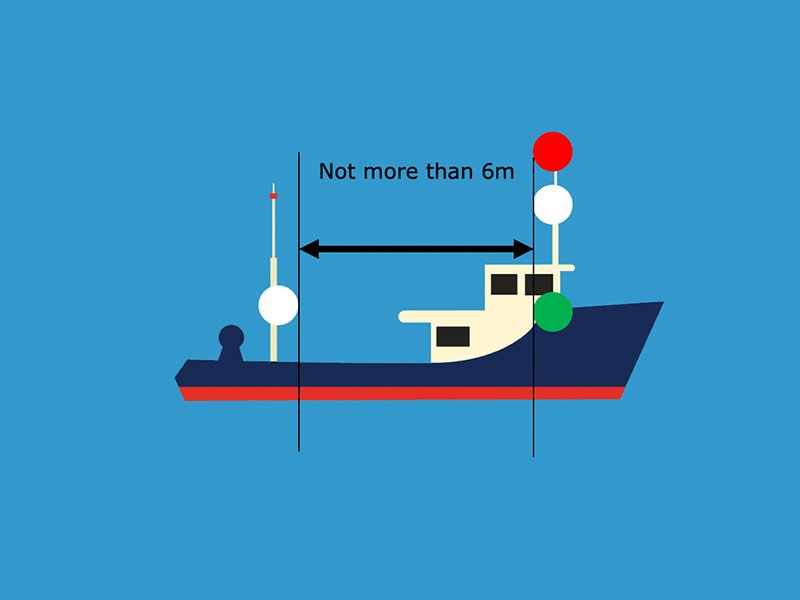
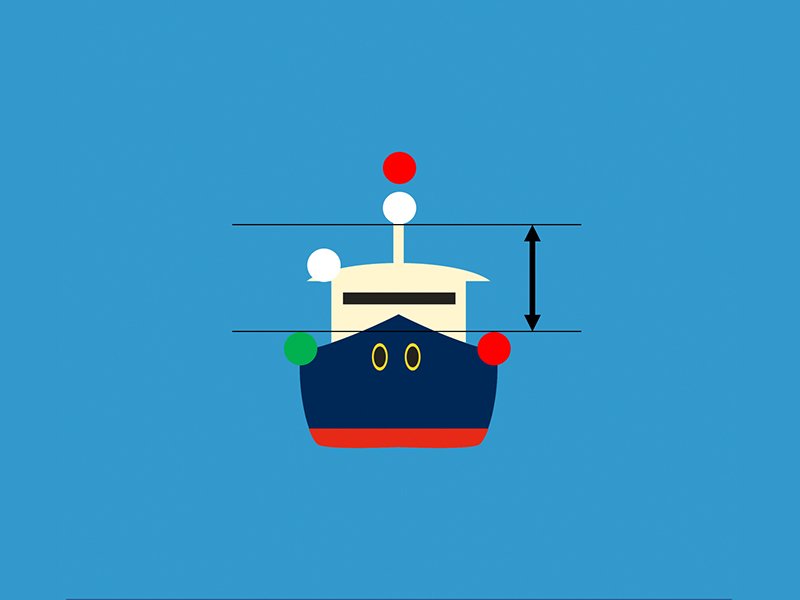
Section 4(a) Details of location of direction-indicating lights for fishing vessels, dredgers and vessels engaged in underwater operations. The light indicating the direction of the outlying gear from a vessel engaged in fishing as prescribed in Rule 26(c)(ii). shall be placed at a horizontal distance of not less than 2 metres and not more than 6 metres away from the two all-round red and white lights. This light shall be placed not higher than the all-round white light prescribed in Rule 26(c)(i) and not lower than the sidelights.
- “The light indicating the direction of the outlying gear from a vessel engaged in fishing as prescribed in Rule 26(c)(ii)”This is the all-round white light a vessel fishing (other than trawling) shows towards gear extending more than 150 metres (Rule 26(c)(ii)). The full stop after “26(c)(ii)” is as printed in MSN 1781.
- “shall be placed at a horizontal distance of not less than 2 metres and not more than 6 metres away from the two all-round red and white lights”It is 2 to 6 metres away horizontally from the red over white lights, on the side of the gear.
- “This light shall be placed not higher than the all-round white light prescribed in Rule 26(c)(i) and not lower than the sidelights”Its height is between the sidelights and the white all-round light.
- The light indicating outlying gear shall also not be placed lower than the sidelights and higher than the all round white light of the fishing signal.
Outlying gear light: 2 to 6 m out from the red over white, no higher than the white and no lower than the sidelights.
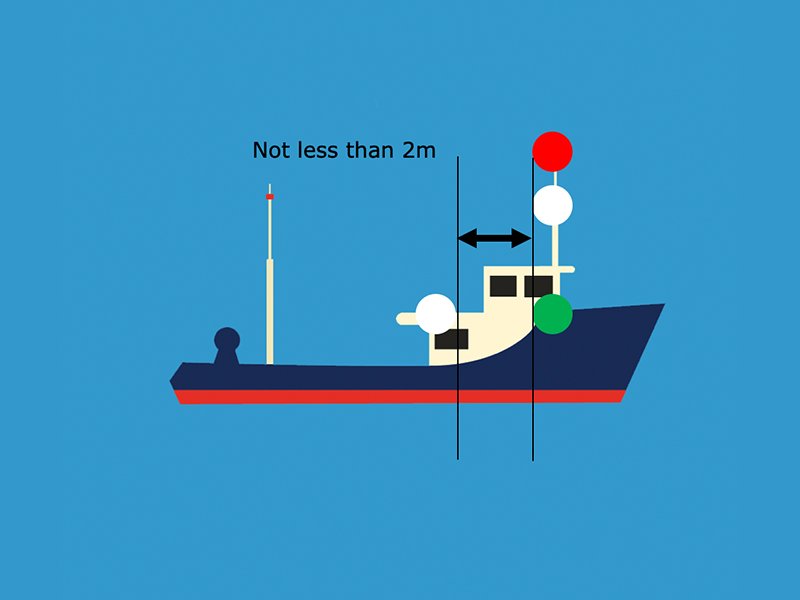
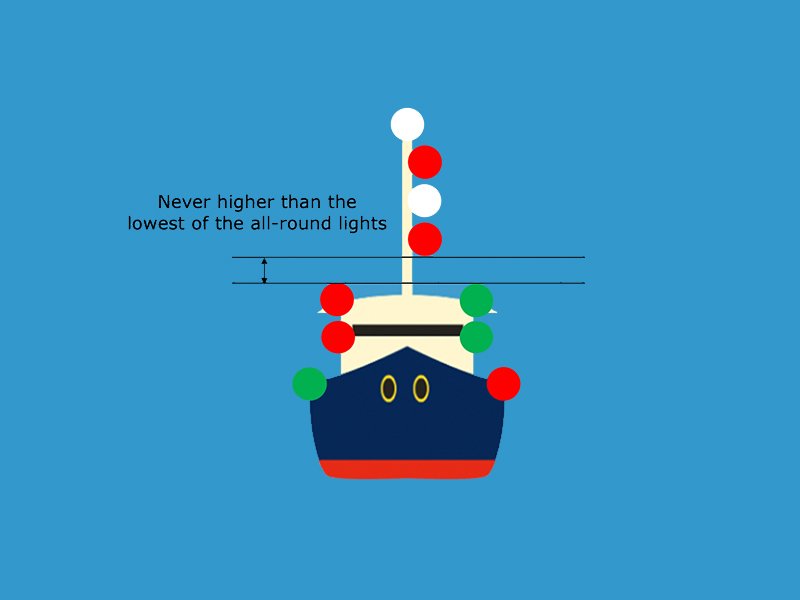
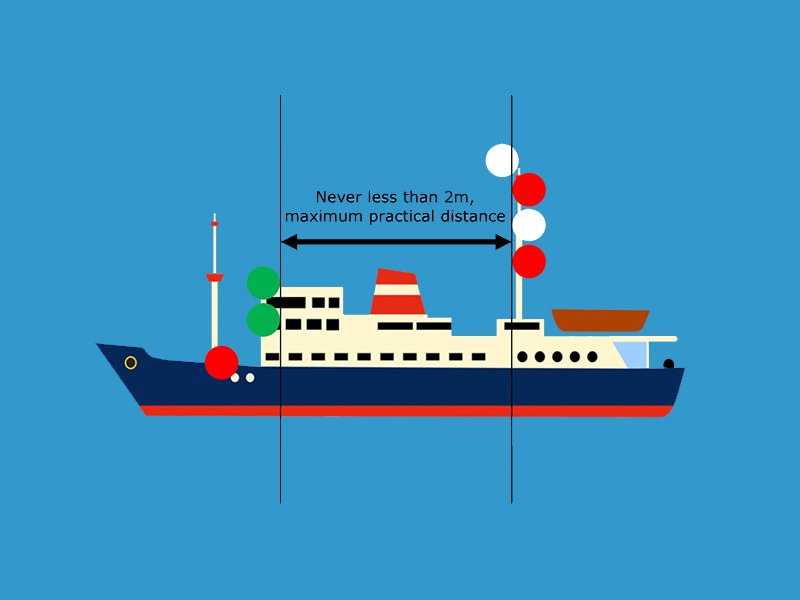
Section 4(b) The lights and shapes on a vessel engaged in dredging or underwater operations to indicate the obstructed side and or the side on which it is safe to pass, as prescribed in Rule 27(d)(i) and (ii), shall be placed at the maximum practical horizontal distance, but in no case less than 2 metres, from the lights or shapes prescribed in Rule 27(b)(i) and (ii). In no case shall the upper of these lights or shapes be at a greater height than the lower of the three lights or shapes prescribed in Rule 27(b)(i) and (ii).
- “The lights and shapes on a vessel engaged in dredging or underwater operations to indicate the obstructed side and or the side on which it is safe to pass, as prescribed in Rule 27(d)(i) and (ii)”These are the two reds or two balls (obstruction side) and two greens or two diamonds (safe side) of Rule 27(d).
- “shall be placed at the maximum practical horizontal distance, but in no case less than 2 metres, from the lights or shapes prescribed in Rule 27(b)(i) and (ii)”They go as far out as practicable from the red-white-red lights (ball-diamond-ball by day), and never less than 2 metres from them.
- “In no case shall the upper of these lights or shapes be at a greater height than the lower of the three lights or shapes prescribed in Rule 27(b)(i) and (ii)”The upper one of each pair is no higher than the lowest of the red-white-red lights or ball-diamond-ball shapes.
Side signals of a dredger: well out to each side (at least 2 m) and no higher than the lowest of her three RAM lights or shapes.
Section 5 Screens for sidelights. The sidelights of vessels of 20 metres or more in length shall be fitted with inboard screens painted matt black, and meeting the requirements of Section 9 of this Annex. On vessels of less than 20 metres in length the sidelights, if necessary to meet the requirements of Section 9 of this Annex, shall be fitted with inboard matt black screens. With a combined lantern, using a single vertical filament and a very narrow division between the green and red sections, external screens need not be fitted.
- “The sidelights of vessels of 20 metres or more in length shall be fitted with inboard screens painted matt black, and meeting the requirements of Section 9 of this Annex”20 metres or more: each sidelight has a matt black screen on its inboard side, so it shows only over its own arc (Section 9, Rule 21(b)).
- “On vessels of less than 20 metres in length the sidelights, if necessary to meet the requirements of Section 9 of this Annex, shall be fitted with inboard matt black screens”Under 20 metres, screens are needed only if the sidelights wouldn’t otherwise meet Section 9.
- “With a combined lantern, using a single vertical filament and a very narrow division between the green and red sections, external screens need not be fitted”A combined lantern with a single vertical filament and a very narrow red/green division needs no external screens.
Sidelight screens: matt black inboard screens at 20 m or more; under 20 m only if needed to meet Section 9.
Section 6(a) Shapes. Shapes shall be black and of the following sizes:
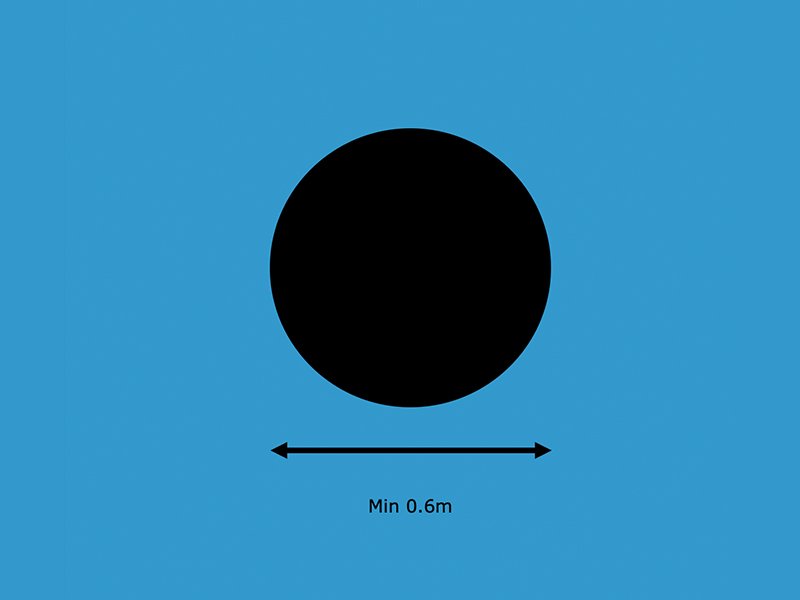
(i) a ball shall have a diameter of not less than 0.6 metre;
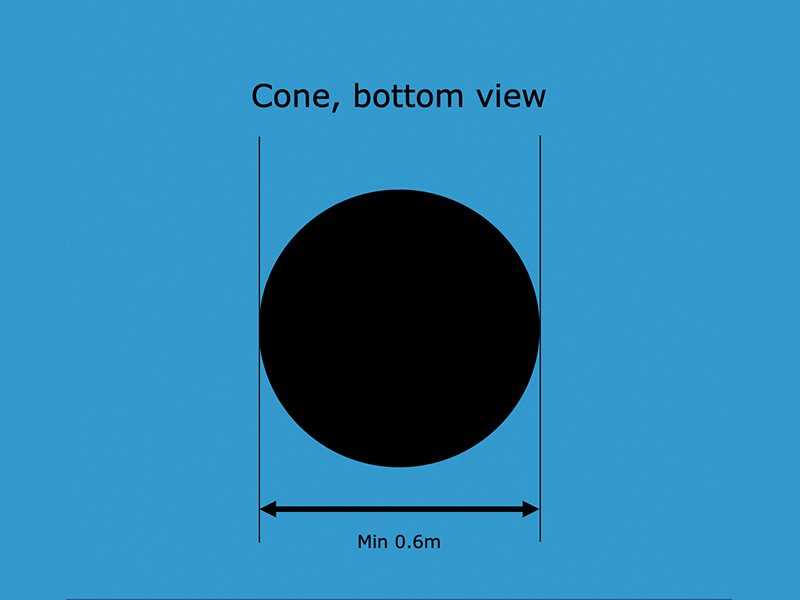
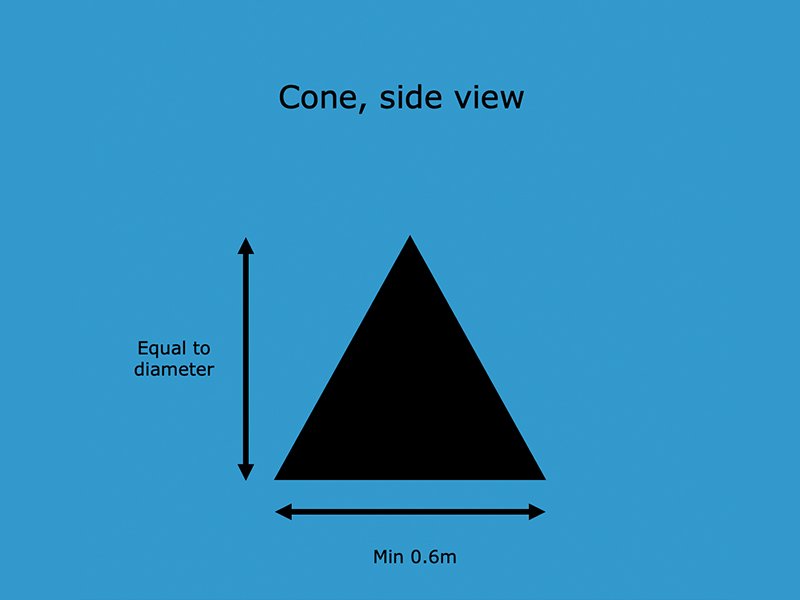
(ii) a cone shall have a base diameter of not less than 0.6 metre and a height equal to its diameter;
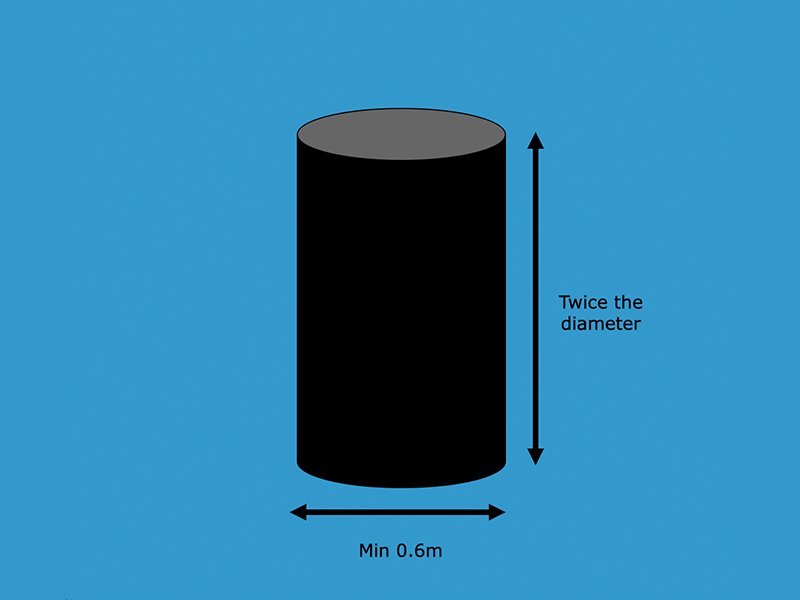
(iii) a cylinder shall have a diameter of at least 0.6 metre and a height of twice its diameter
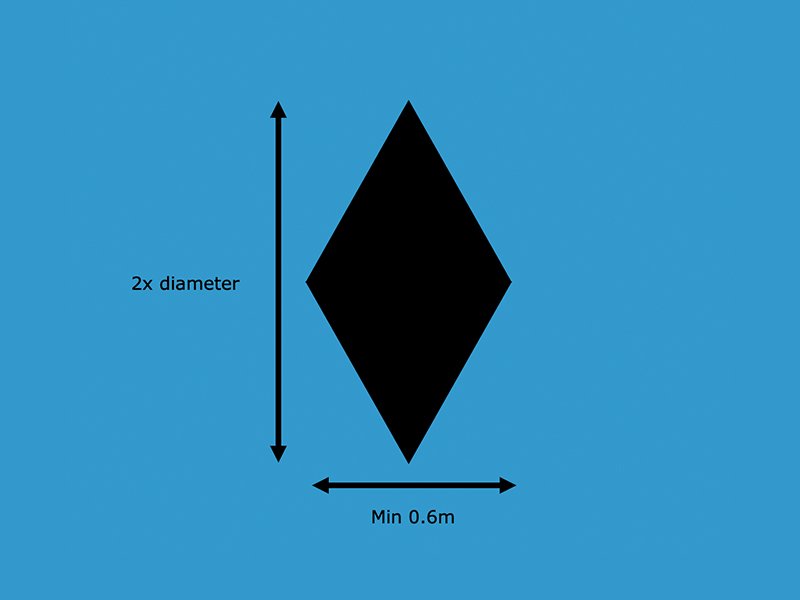
(iv) a diamond shape shall consist of two cones as defined in (ii) above having a common base.
- “Shapes shall be black and of the following sizes”All day shapes are black.
- “(i) a ball shall have a diameter of not less than 0.6 metre”Ball: at least 0.6 metre across.
- “(ii) a cone shall have a base diameter of not less than 0.6 metre and a height equal to its diameter”Cone: base at least 0.6 metre across, and as tall as it is wide.
- “(iii) a cylinder shall have a diameter of at least 0.6 metre and a height of twice its diameter”Cylinder: at least 0.6 metre across, and twice as tall as it is wide.
- “(iv) a diamond shape shall consist of two cones as defined in (ii) above having a common base”Diamond: two such cones base to base, so at least 0.6 metre wide and 1.2 metres tall.
- A cone shall have the same height as the diameter, This measurement shall be a minimum of 60cm.
- A cylinder diameter shall be a minimum of 60cm and the height of the cylinder shall be double this number.
- A diamond shape is two cones with the widest part together to make up the diamond shape. With this in mind, the diameter must be a minimum of 60cm as per the cone shape, and as there is 2 with the bases together the minimum height of the diamond would be double this number.
Shapes are black; ball, cone and cylinder at least 0.6 m across; a cone is as tall as it is wide, a cylinder twice as tall; a diamond is two cones base to base.
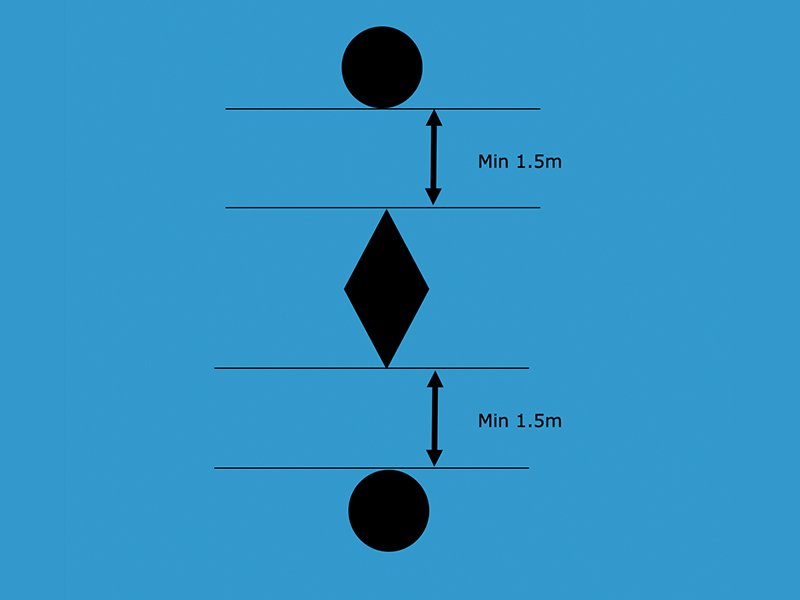
Section 6(b) The vertical distance between shapes shall be at least 1.5 metres.
- “The vertical distance between shapes shall be at least 1.5 metres”Shapes shown one above the other are at least 1.5 metres apart.
Shapes at least 1.5 m apart vertically.
Section 6(c) In a vessel of less than 20 metres in length shapes of lesser dimensions but commensurate with the size of the vessel may be used and the distance apart may be correspondingly reduced.
- “In a vessel of less than 20 metres in length shapes of lesser dimensions but commensurate with the size of the vessel may be used and the distance apart may be correspondingly reduced”Under 20 metres, shapes may be smaller, in proportion to the vessel (“commensurate” means in proportion), and closer together.
Under 20 m: smaller shapes, closer together, in proportion to her size.
Section 7 Colour specification of lights. The chromaticity of all navigation lights shall conform to the following standards, which lie within the boundaries of the area of the diagram specified for each colour by the International Commission on Illumination (CIE).
The boundaries of the area for each colour are given by indicating the corner co-ordinates, which are as follows:
- “The chromaticity of all navigation lights shall conform to the following standards, which lie within the boundaries of the area of the diagram specified for each colour by the International Commission on Illumination (CIE)”Chromaticity is the colour of a light, apart from its brightness. Each navigation light colour must fall inside a defined area of the international (CIE) colour chart.
- “The boundaries of the area for each colour are given by indicating the corner co-ordinates”The table gives the corners of the area for white, green, red and yellow. This is for manufacturers and approval authorities; you don’t need to learn the figures.
Navigation light colours must meet the CIE colour standards in the table. Know that this is where they are set.
Section 8(a) Intensity of lights. The minimum luminous intensity of lights shall be calculated by using
I = 3.43 × 10⁶ × T × D2 × K–D
where I is luminous intensity in candelas under service conditions,
T is threshold factor 2 × 10⁻⁷ lux,
D is range of visibility (luminous range) of the light in nautical miles,
K is atmospheric transmissivity.
For prescribed lights the value of K shall be 0.8, corresponding to a meteorological visibility of approximately 13 nautical miles.
- “The minimum luminous intensity of lights shall be calculated by using”The formula gives how bright (in candelas) a light must be to be seen at its required range (Rule 22).
- “For prescribed lights the value of K shall be 0.8, corresponding to a meteorological visibility of approximately 13 nautical miles”The calculation assumes clear weather: about 13 miles meteorological visibility. In haze or rain you will see the lights at less than their rated range.
Light intensities are calculated for clear weather (about 13 miles visibility). Know the formula exists; you don’t need to learn it.
Section 8(b) A selection of figures derived from the formula is given in the following table:
Note: The maximum luminous intensity of navigation lights should be limited to avoid undue glare. This shall not be achieved by a variable control of the luminous intensity.
- “A selection of figures derived from the formula is given in the following table”The table shows the minimum intensity for each range: 0.9 candelas for 1 mile, up to 94 candelas for 6 miles. Doubling the range takes far more than double the intensity.
- “Note: The maximum luminous intensity of navigation lights should be limited to avoid undue glare. This shall not be achieved by a variable control of the luminous intensity”Navigation lights shouldn’t be so bright that they dazzle. That limit must be built into the light: a dimmer may not be used to achieve it.
Minimum intensity rises steeply with range. Lights must not dazzle, and dimmers are not the way to prevent it.
Section 9(a) Horizontal sectors.
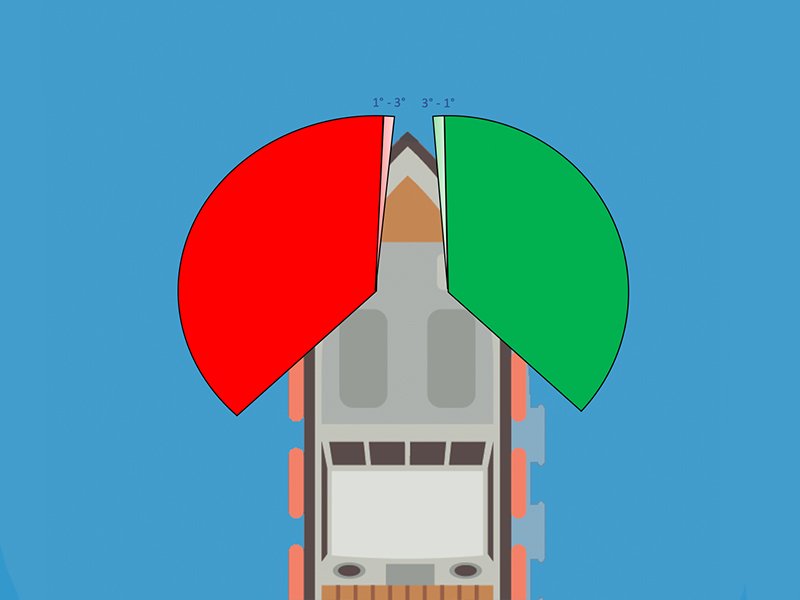
(i) In the forward direction, sidelights as fitted on the vessel shall show the minimum required intensities. The intensities shall decrease to reach practical cut-off between 1 degree and 3 degrees outside the prescribed sectors.
(ii) For stern lights and masthead lights at 22.5 degrees abaft the beam for sidelights, the minimum required intensities shall be maintained over the arc of the horizon up to 5 degrees within the limits of the sectors prescribed in Rule 21. From 5 degrees within the prescribed sectors the intensity may decrease by 50 per cent up to the prescribed limits: it shall decrease steadily to reach practical cut-off at not more than 5 degrees outside the prescribed sectors.
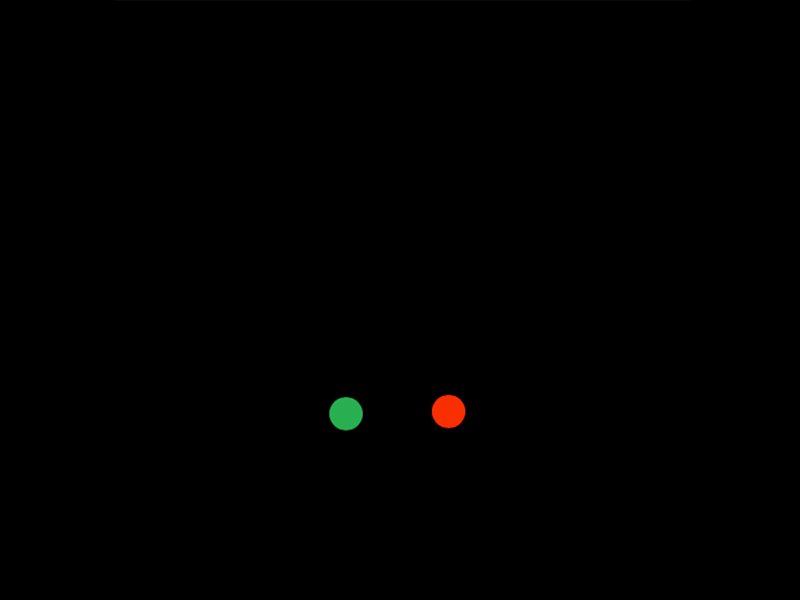
- “(i) In the forward direction, sidelights as fitted on the vessel shall show the minimum required intensities. The intensities shall decrease to reach practical cut-off between 1 degree and 3 degrees outside the prescribed sectors”Looking ahead, each sidelight is at full strength right up to dead ahead, then fades out within 1° to 3° past it. So from close to dead ahead you may see both red and green.
- “(ii) For stern lights and masthead lights at 22.5 degrees abaft the beam for sidelights, the minimum required intensities shall be maintained over the arc of the horizon up to 5 degrees within the limits of the sectors prescribed in Rule 21”At the edges of their arcs (Rule 21) — the sternlight and masthead light at both edges, and each sidelight at its edge 22.5° abaft the beam — full strength must last until 5° inside the edge.
- “From 5 degrees within the prescribed sectors the intensity may decrease by 50 per cent up to the prescribed limits: it shall decrease steadily to reach practical cut-off at not more than 5 degrees outside the prescribed sectors”Over the last 5° the light may drop to half strength, and it must fade out within 5° beyond the edge. So near 22.5° abaft the beam you may briefly see both a sidelight and the sternlight, or neither clearly.
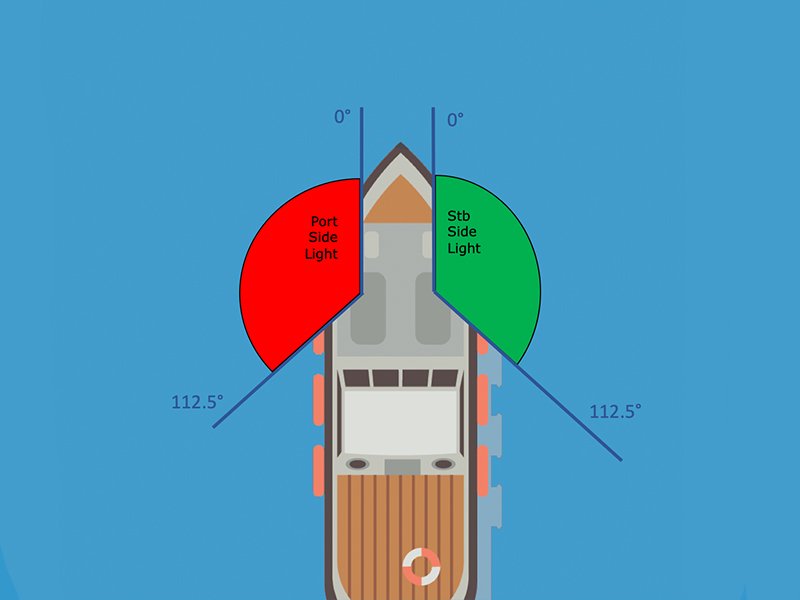
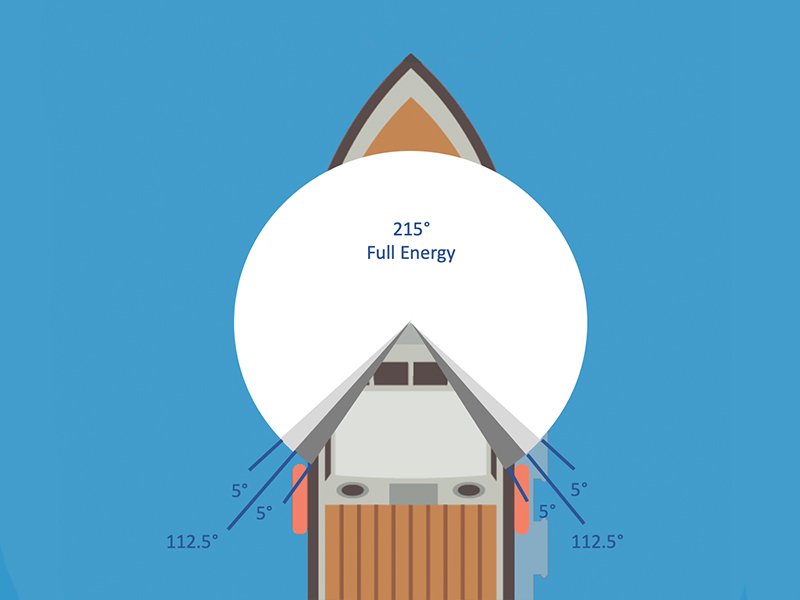
- For masthead lights, Rule 21 states an arc of visibility from ahead to 22.5 degrees abaft the beam. This gives the masthead light a 225 degree arc from either side. Within 5 degrees of each side the intensity of the light can be decreased by 50%. And then must completely cut out by 5 degrees after the arc of visibility. Looking at the diagram below, we have 215 degrees of full energy, then the light grey area it may decrease to 50% and the dark grey area the light must reach practical cut out and not be seen from more than the 27.5 degrees abaft the beam on each side.
Lights fade out just beyond their arcs: sidelights within 1° to 3° ahead, other edges within 5°. Near the boundaries you may see both lights, or neither clearly.
Section 9(b) (i) All-round lights shall be so located as not to be obscured by masts, topmasts or structures within angular sectors of more than 6 degrees, except anchor lights prescribed in Rule 30, which need not be placed at an impracticable height above the hull.
(ii) If it is impracticable to comply with paragraph (b) (i) of this section by exhibiting only one all-round light, two all-round lights shall be used suitably positioned or screened so that they appear, as far as practicable, as one light at a distance of one mile.
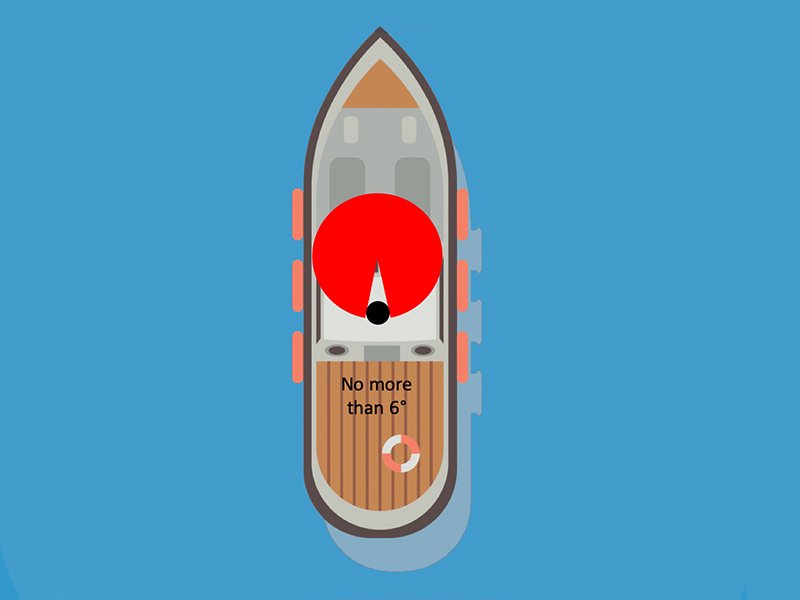
- “(i) All-round lights shall be so located as not to be obscured by masts, topmasts or structures within angular sectors of more than 6 degrees”An all-round light may be hidden by a mast or structure only over a narrow sector: no blind sector wider than 6°.
- “except anchor lights prescribed in Rule 30, which need not be placed at an impracticable height above the hull”Anchor lights are the exception: they needn’t be raised impracticably high to meet this.
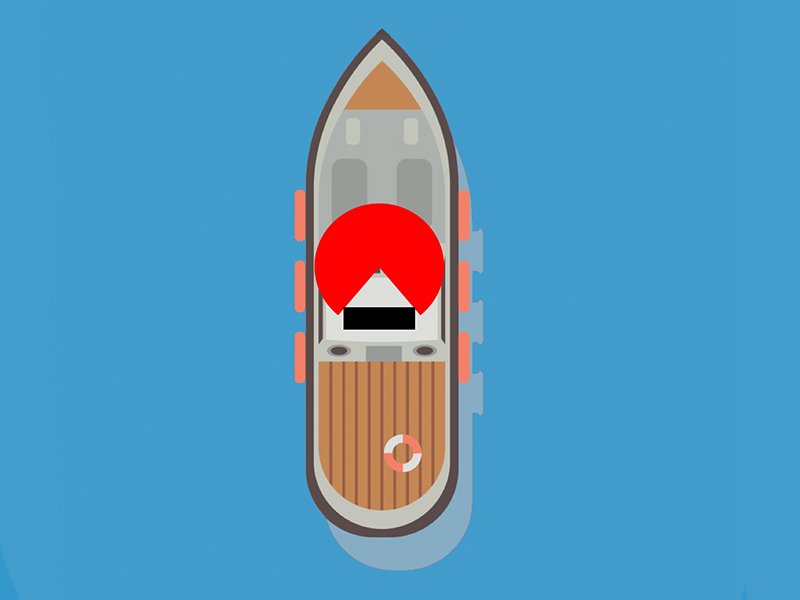
- “(ii) If it is impracticable to comply with paragraph (b) (i) of this section by exhibiting only one all-round light, two all-round lights shall be used suitably positioned or screened so that they appear, as far as practicable, as one light at a distance of one mile”If one light can’t do it, two lights are used, placed or screened so that from a mile away they look like one light.
- If you are unable to use one all round light and it is blocked by more than 6 degrees by any structure on the vessel, then 2 lights may be used. These lights shall not be seen as 2 separate lights and from a distance of 1 mile shall be seen as one.
All-round lights: no blind sector over 6°; if one light can’t manage it, two that look like one at a mile.
Section 10(a) Vertical sectors. The vertical sectors of electric lights as fitted, with the exception of lights on sailing vessels underway shall ensure that:
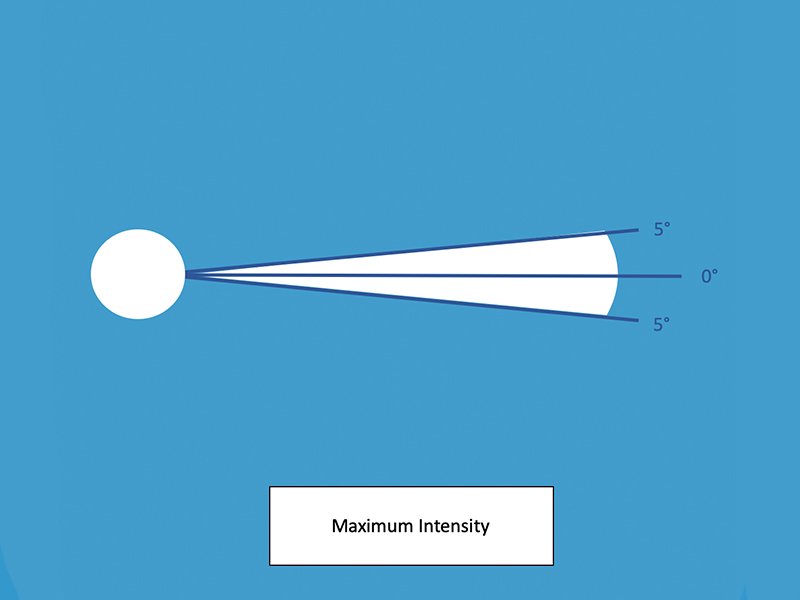
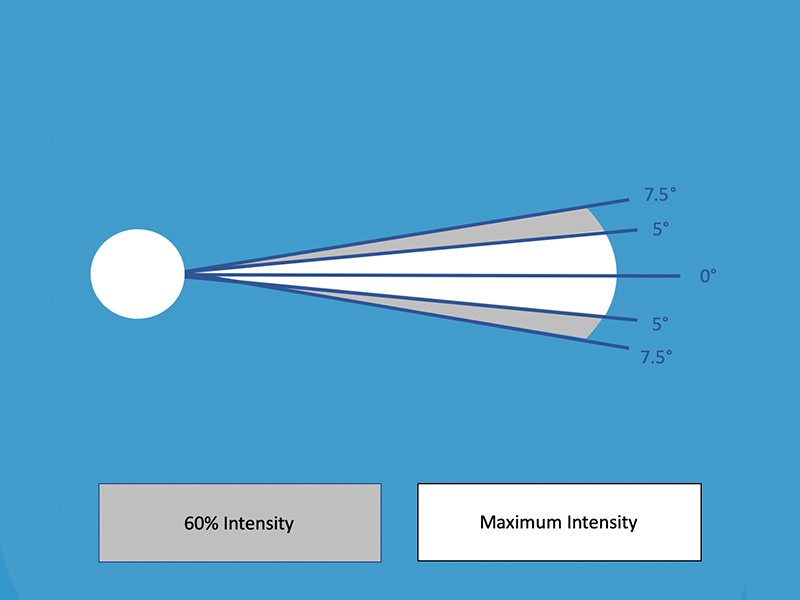
(i) at least the required minimum intensity is maintained at all angles from 5 degrees above to 5 degrees below the horizontal;
(ii) at least 60 per cent of the required minimum intensity is maintained from 7.5 degrees above to 7.5 degrees below the horizontal.
- “The vertical sectors of electric lights as fitted, with the exception of lights on sailing vessels underway shall ensure that”Vertical sectors are how far above and below the horizontal a light is still visible, which matters as a vessel rolls and pitches. This paragraph is for all vessels except sailing vessels underway.
- “(i) at least the required minimum intensity is maintained at all angles from 5 degrees above to 5 degrees below the horizontal”Full required strength from 5° above to 5° below the horizontal.
- “(ii) at least 60 per cent of the required minimum intensity is maintained from 7.5 degrees above to 7.5 degrees below the horizontal”At least 60 per cent of it out to 7.5° above and below.
- After the 5 degrees either side the next 2.5 degrees after that should have a minimum of 60% intensity of the light.
Vertical sectors: full strength within ±5°, at least 60 per cent within ±7.5°.
Section 10(b) In the case of sailing vessels underway the vertical sectors of electric lights as fitted shall ensure that:
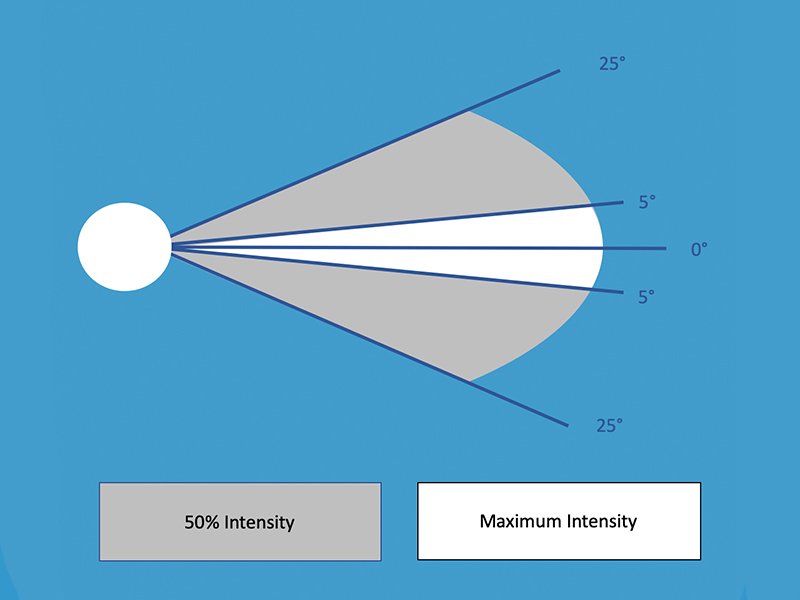
(i) at least the required minimum intensity is maintained at all angles from 5 degrees above to 5 degrees below the horizontal;
(ii) at least 50 per cent of the required minimum intensity is maintained from 25 degrees above to 25 degrees below the horizontal.
- “In the case of sailing vessels underway the vertical sectors of electric lights as fitted shall ensure that”Sailing vessels underway have a wider requirement, so their lights stay visible when they heel.
- “(i) at least the required minimum intensity is maintained at all angles from 5 degrees above to 5 degrees below the horizontal”Full required strength from 5° above to 5° below the horizontal.
- “(ii) at least 50 per cent of the required minimum intensity is maintained from 25 degrees above to 25 degrees below the horizontal”At least 50 per cent of it out to 25° above and below.
- 50% of the minimum intensity required from 25 degrees above to 25 degrees below, This is because sailing yachts are more likely to roll and pitch.
Sailing vessels: full strength within ±5°, at least 50 per cent within ±25°.
Section 10(c) In the case of lights other than electric these specifications shall be met as closely as possible.
- “In the case of lights other than electric these specifications shall be met as closely as possible”Non-electric lights, such as oil lanterns, must meet these vertical sectors as closely as they can.
Non-electric lights: as close to these sectors as possible.
Section 11 Intensity of non-electric lights. Non-electric lights shall so far as practicable comply with the minimum intensities, as specified in the table given in Section 8 of this Annex.
- “Non-electric lights shall so far as practicable comply with the minimum intensities, as specified in the table given in Section 8 of this Annex”Non-electric lights should reach the minimum intensities in the Section 8 table as far as practicable.
Non-electric lights: Section 8 intensities, as far as practicable.
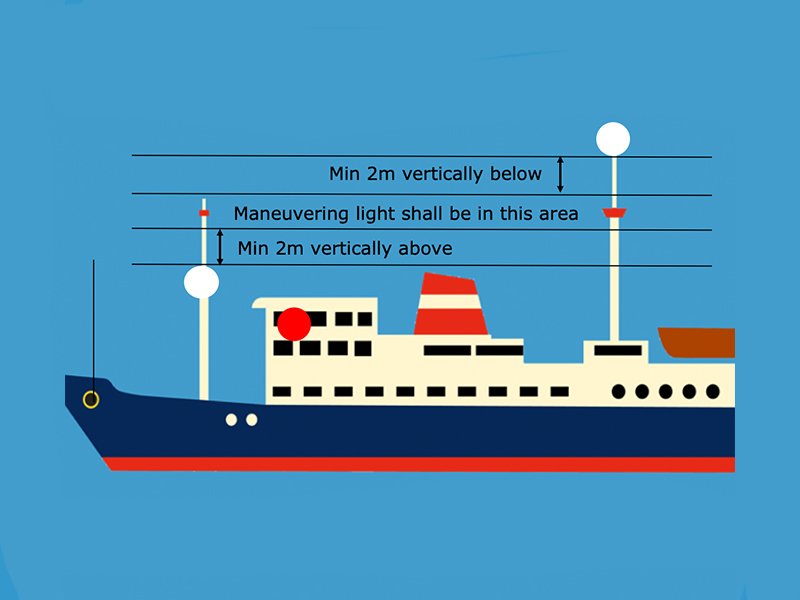
Section 12 Manoeuvring light. Notwithstanding the provisions of paragraph 2(f) of this Annex the manoeuvring light described in Rule 34(b) shall be placed in the same fore and aft vertical plane as the masthead light or lights and, where practicable, at a minimum height of 2 metres vertically above the forward masthead light, provided that it shall be carried not less than 2 metres vertically above or below the after masthead light. On a vessel where only one masthead light is carried the manoeuvring light, if fitted, shall be carried where it can best be seen, not less than 2 metres vertically apart from the masthead light.
- “Notwithstanding the provisions of paragraph 2(f) of this Annex the manoeuvring light described in Rule 34(b) shall be placed in the same fore and aft vertical plane as the masthead light or lights”The manoeuvring light (the all-round white light flashed with whistle signals, Rule 34(b)) goes in line fore and aft with the masthead lights. This overrides 2(f), so it may be above the masthead lights.
- “and, where practicable, at a minimum height of 2 metres vertically above the forward masthead light, provided that it shall be carried not less than 2 metres vertically above or below the after masthead light”Where practicable, at least 2 metres above the forward masthead light, and always at least 2 metres above or below the after masthead light, so it isn’t confused with them.
- “On a vessel where only one masthead light is carried the manoeuvring light, if fitted, shall be carried where it can best be seen, not less than 2 metres vertically apart from the masthead light”With one masthead light: where it can best be seen, at least 2 metres above or below the masthead light.
Manoeuvring light: in line with the masthead lights and at least 2 m vertically from them.
Section 13(a) High Speed Craft* The masthead light of high-speed craft may be placed at a height related to the breadth of the lower than that prescribed in paragraph 2(a)(i) of this annex, provided that the base angle of the isosceles triangles formed by the sidelights and masthead light, when seen in end elevation, is not less than 27°.
- “The masthead light of high-speed craft may be placed at a height related to the breadth of the lower than that prescribed in paragraph 2(a)(i) of this annex”A high-speed craft may have her masthead light lower than 2(a)(i) requires, related to her breadth. (The word “craft” appears to be missing after “breadth of the” in MSN 1781; the text is shown as printed.)
- “provided that the base angle of the isosceles triangles formed by the sidelights and masthead light, when seen in end elevation, is not less than 27°”Seen from ahead, the two sidelights and the masthead light form a triangle. The angles at the base (at the sidelights) must be at least 27°. The lower the masthead light, the smaller that angle, so this sets how low it can go.
High-speed craft: masthead light may be lower, as long as the base angles of the sidelight-masthead triangle are at least 27°.
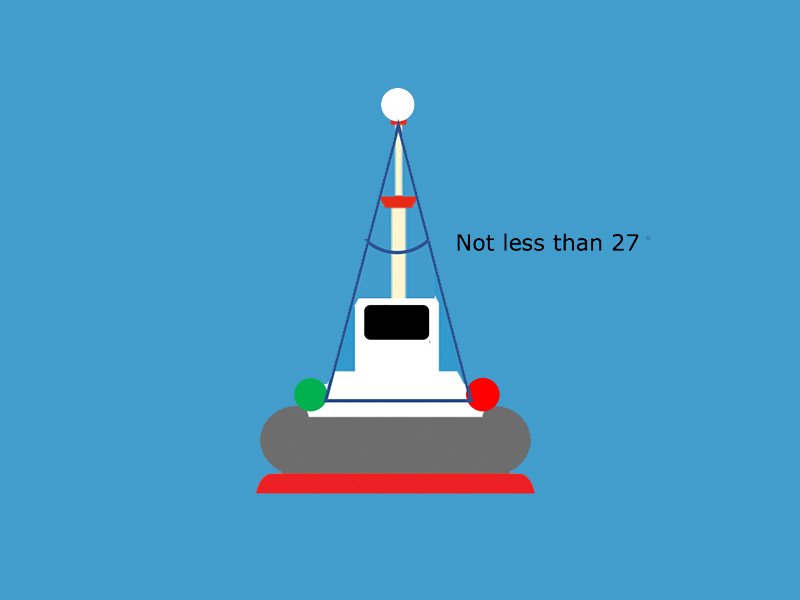
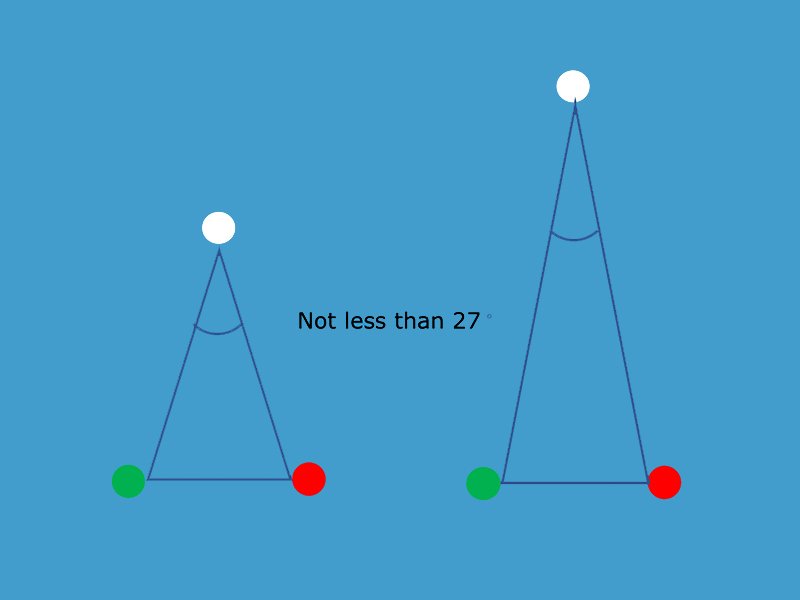
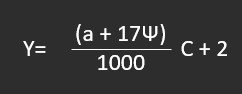
Section 13(b) On high-speed craft of 50 metres or more in length, the vertical separation between foremast and mainmast light of 4.5 metres required by paragraph 2(a)(ii) of this annex may be modified provided that such distance shall not be less than the value determined by the following formula:
Where: y is the height of the mainmast light above the foremast light in metres;
A is the height of the foremast light above the water surface in service condition in metres;
C is the trim in service condition in degrees;
C is the horizontal separation of masthead lights in metres.
* Refer to the International Code of Safety for High-Speed Craft, 1994 and the International Code of Safety for High-Speed Craft, 2000.
- A high speed craft may modify the requirements from paragraph 2(a) then they must use the formula provided to calculate the position of the lights.
- “On high-speed craft of 50 metres or more in length, the vertical separation between foremast and mainmast light of 4.5 metres required by paragraph 2(a)(ii) of this annex may be modified”A high-speed craft of 50 metres or more may have less than the usual 4.5 metres between her two masthead lights.
- “provided that such distance shall not be less than the value determined by the following formula”The minimum is worked out from the formula, using the height of the forward masthead light, her trim and the fore-and-aft distance between the lights. (MSN 1781 labels both the trim and the horizontal separation “C”; the text is shown as printed.)
High-speed craft of 50 m or more: masthead separation may be less than 4.5 m, but not below the formula value.
Section 14 Approval. The construction of lights and shapes and the installation of lights on board the vessel shall be to the satisfaction of the appropriate authority of the State whose flag the vessel is entitled to fly.
- “The construction of lights and shapes and the installation of lights on board the vessel shall be to the satisfaction of the appropriate authority of the State whose flag the vessel is entitled to fly”The flag State’s authority approves how lights and shapes are built and fitted.
The flag State approves lights and shapes and their fitting.