
Part B · Steering and sailing rules · Rule 13
Overtaking
13(a) Notwithstanding anything contained in the Rules of Part B, Sections I and II, any vessel overtaking any other shall keep out of the way of the vessel being overtaken.
- “Notwithstanding anything contained in the Rules of Part B, Sections I and II”Rule 13 overrides Rules 4 to 18. Whatever else those Rules say, for example Rule 12 for sailing vessels or Rule 18 for vessels of different types, an overtaking vessel keeps clear. Rule 18 itself begins “Except where Rules 9, 10 and 13 otherwise require”. Rule 13 is in Section II, so it applies only to vessels in sight of one another (Rule 11).
- “any vessel overtaking any other shall keep out of the way of the vessel being overtaken”Any type of vessel overtaking any other: a sailing vessel overtaking a power-driven vessel, or a fishing vessel overtaking a sailing yacht, still keeps clear. She takes early and substantial action to keep well clear (Rule 16). The vessel being overtaken keeps her course and speed (Rule 17).
If you are overtaking, you keep clear, whatever type of vessel you are and whatever type she is.
13(b) A vessel shall be deemed to be overtaking when coming up with another vessel from a direction more than 22.5 degrees abaft her beam, that is, in such a position with reference to the vessel she is overtaking, that at night she would be able to see only the stern light of that vessel but neither of her sidelights.
- “A vessel shall be deemed to be overtaking when coming up with another vessel from a direction more than 22.5 degrees abaft her beam”Overtaking is defined by where you are approaching from: anywhere more than 22.5° abaft the other vessel’s beam, on either side. That is a sector of 135° centred on her stern.
- “that is, in such a position with reference to the vessel she is overtaking, that at night she would be able to see only the stern light of that vessel but neither of her sidelights”The sector matches her lights. Sidelights show from right ahead to 22.5° abaft the beam (Rule 21(b)); the sternlight shows over the 135° astern (Rule 21(c)). If you can see her sternlight and neither sidelight, you are overtaking.
At night: if you see only her sternlight, you are overtaking. If you see a sidelight, you are not, and Rule 14 or 15 may apply instead.
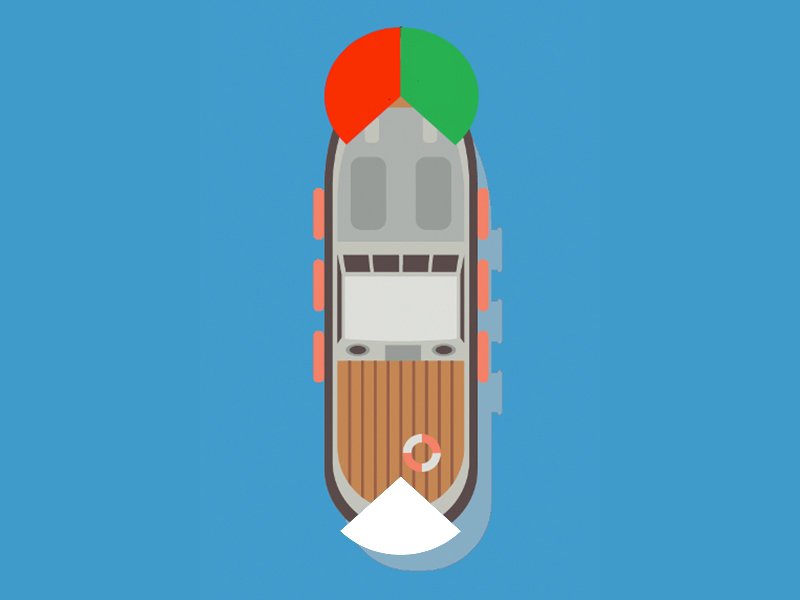
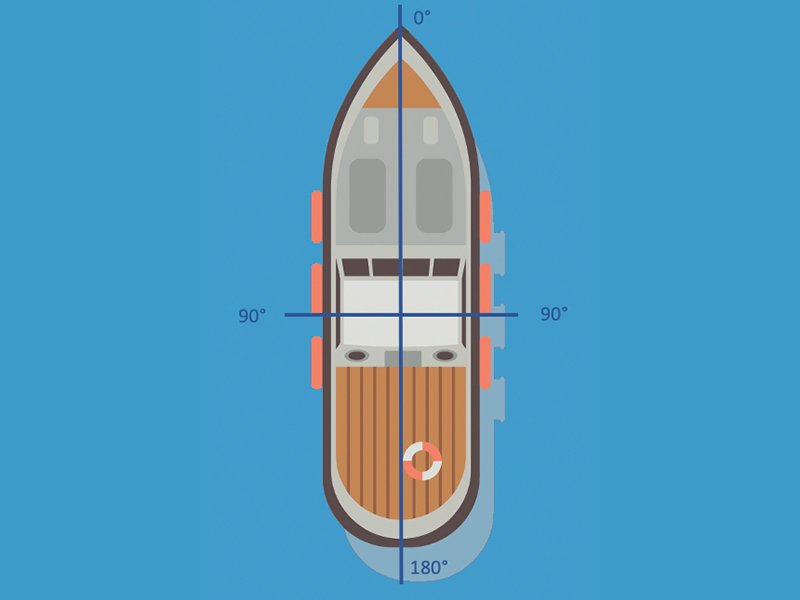
13(c) When a vessel is in any doubt as to whether she is overtaking another, she shall assume that this is the case and act accordingly.
- “When a vessel is in any doubt as to whether she is overtaking another, she shall assume that this is the case and act accordingly”Doubt is most likely when you are close to 22.5° abaft her beam. At night you may see her sternlight and a sidelight at times as she yaws. Assume you are overtaking and keep clear. Never assume you are crossing and that the other vessel should give way.
If in doubt, you are the overtaking vessel: keep clear.


13(d) Any subsequent alteration of the bearing between the two vessels shall not make the overtaking vessel a crossing vessel within the meaning of these Rules or relieve her of the duty of keeping clear of the overtaken vessel until she is finally past and clear.
- “Any subsequent alteration of the bearing between the two vessels shall not make the overtaking vessel a crossing vessel within the meaning of these Rules”As you draw level and move ahead, you end up forward of her beam, which could look like a crossing situation. It isn’t: you remain the overtaking vessel, and Rule 15 does not apply.
- “or relieve her of the duty of keeping clear of the overtaken vessel until she is finally past and clear”You stay the give-way vessel until you are well past and clear. Don’t cut across her bow or turn back across her path too soon.
Once overtaking, always overtaking, until finally past and clear. Drawing ahead of her beam does not make you a crossing vessel.